

Posted by Peter Glenn Ski Experts on Sep 1st 2026
Table of Contents
- When to Ski in New Zealand
- Skiing in Queenstown: The Home Mountains
- Wānaka: Treble Cone and Cardrona Alpine Resort
- Beyond the Resorts: Club Fields and Heli Skiing
- North Island: Mt Ruapehu
- New Zealand Ski Field Comparison
- Peter Glenn: Gear Up for Your New Zealand Ski Holiday
At a Glance: New Zealand's ski season runs from mid-June to mid-October, which lets North American skiers chase winter through their own summer. Queenstown anchors the country's most popular ski region, backed by world-class ski resorts near Wānaka, rugged club fields, and some of the best heli skiing in the Southern Hemisphere.
New Zealand offers a unique ski experience with a season that runs opposite to the Northern Hemisphere. While the Northern Hemisphere thaws out, the Southern Alps settle into ski season, and the mountains around Queenstown become a destination for skiers and snow sports fans. Knowing where to ski and when to visit can help you make the most of your time on the mountain.

When to Ski in New Zealand
Because New Zealand sits in the Southern Hemisphere, its ski season takes place during the North American summer. Most commercial ski fields, the local term for ski areas and resorts, open in mid-June and run through mid-October. In a strong year, snowfall can arrive as early as April and continue into November. Peak season typically falls in July and August, when the most reliable snow conditions and deepest bases are found across the mountains.
The best time to visit depends on what kind of ski experience you want:
- June: Early season with thinner snow coverage and more reliance on snowmaking. A good option for lighter crowds and lower lift ticket prices.
- July to August: Peak season with the most consistent snow conditions and busiest slopes. Book accommodations and lessons well ahead of time.
- September to October: Spring skiing brings longer sunny days and softer afternoon snow. A more relaxed period for skiers looking to avoid peak-season crowds.
For a Northern Hemisphere skier, a mid-year ski holiday offers the chance to add another winter season to the calendar. Spring skiing in New Zealand brings bluebird days and mountain conditions that feel worlds away from summer at home.
Skiing in Queenstown: The Home Mountains
Queenstown is one of the most convenient bases for a first New Zealand ski trip. Located in the Southern Lakes region on the shore of Lake Wakatipu, it offers easy access to two ski areas within an hour of town, an international airport, and a lively lakeside dining and après scene after a day on the slopes.
Coronet Peak
Coronet Peak is the closest ski field to Queenstown, roughly a 20-minute drive from the valley floor, which makes it the most convenient option. It runs about 1,500 vertical feet of wide, groomed terrain that suits beginners and intermediates. It is also the country's best-known spot for night skiing, with floodlit sessions several evenings a week and breathtaking views over Lake Wakatipu and The Remarkables. It runs from 13 June to 4 October in 2026.
The Remarkables
About 45 minutes from town, The Remarkables is one of Queenstown's most scenic ski areas. Three sunny bowls open onto a mix of learner slopes, terrain parks, and steeper terrain, including challenging chutes for advanced skiers. The mountain receives less direct sun than some nearby areas, helping the snow stay colder and drier throughout the season. The 2026 season runs from 13 June to 11 October. Queenstown ski passes cover both local ski fields, making it easy to ski multiple areas during one trip..
Wānaka: Treble Cone and Cardrona Alpine Resort
A scenic drive over the Crown Range from Queenstown leads to Wānaka, a quieter lakeside town in the Southern Lakes region that serves as a base for two of the South Island's top ski fields.
Treble Cone
Treble Cone is the largest ski area in the region and a favorite among advanced skiers. It offers more than 2,200 vertical feet of terrain, with long groomers, open powder faces, and natural half-pipes that reward experienced riders. Treble Cone also records some of New Zealand's highest average snowfall, while its views across the lake and surrounding mountain range are a major part of the experience.
Cardrona Alpine Resort
Cardrona Alpine Resort is known for its family-friendly terrain and strong freestyle scene. Its four terrain parks rank among the best in the Southern Hemisphere, and recent expansion has made it one of the largest lift-accessed ski areas in New Zealand. Wide groomers and gentle learner slopes make it welcoming for first-timers, while areas like Captain's Basin and the Arcadia chutes offer more challenging terrain for advanced skiers. Cardrona and Treble Cone share a dual-mountain pass, allowing visitors to ski both destinations on the same ticket.

Beyond the Resorts: Club Fields and Heli Skiing
Club Fields
New Zealand's most distinctive skiing happens away from the major commercial resorts. The country's club fields are small, volunteer-run ski areas, mostly located in the Canterbury mountains, where the focus is on community, natural terrain, and a more traditional ski experience. Expect rope tows and nutcracker lifts instead of chairlifts, fewer crowds, and ungroomed terrain that rewards confident skiers. Club members help operate and maintain these areas, while day visitors are welcome. Lodges are typically simple bunkrooms, and overnight guests may need to bring their own sleeping bag.
Broken River is one of the best-known club fields, accessed by a short traverse from the car park before opening into wide basins and steep chutes. Along with its neighboring club fields, Broken River trades convenience for uncrowded terrain and a more traditional ski experience. Limited grooming means it is best suited for confident intermediate and advanced skiers rather than complete beginners.
Heli Skiing and Ski Touring
Heli skiing offers a completely different way to experience New Zealand's mountains. Operators around Queenstown, Wānaka, and Methven fly skiers into remote alpine terrain for untracked runs beyond the ski field boundaries. A guided heli skiing day provides access to fresh snow, large descents, and terrain that would otherwise be difficult to reach. Guided ski touring offers a lower-cost way to explore similar backcountry areas for skiers with the right fitness and experience.
North Island: Mt Ruapehu
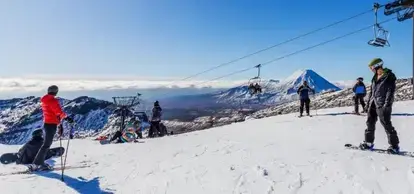
Most visitors focus on the South Island, but the North Island offers a unique experience: skiing on an active volcano. Mt Ruapehu, in Tongariro National Park, is home to two ski fields, Whakapapa and Tūroa, which together make up the largest ski area in New Zealand. The volcanic terrain creates a landscape unlike the South Island, with wide-open basins, natural features, and weather patterns that can change quickly. If your itinerary already includes the North Island, a day on Ruapehu is a memorable addition to the trip.
New Zealand Ski Field Comparison
Compare the main South Island ski fields by terrain, ability level, and overall experience.
|
Ski Field |
Best For |
Near |
|
Coronet Peak |
Beginners, intermediates, night skiing |
Queenstown |
|
The Remarkables |
Parks, chutes, mixed ability |
Queenstown |
|
Treble Cone |
Advanced skiers, off-piste, views |
Wānaka |
|
Cardrona |
Families, parks, learners |
Wānaka |
|
Club fields |
Confident skiers seeking uncrowded snow |
Canterbury |
What to Know Before You Go
A few practical details can make planning a New Zealand ski holiday much easier:
- Getting around: Most skiers base themselves in Queenstown, Wānaka, or Methven and drive or shuttle to the mountains each day. Ski field access roads can be narrow and icy, so carry chains or book a mountain shuttle.
- Lift tickets: Buying passes online in advance is usually cheaper than purchasing at the window, and multi-day or dual-mountain passes can reduce the cost of a longer ski trip.
- Lessons and rentals: Major ski areas have reliable rental shops and ski schools, making it easy for first-time visitors to get equipped and learn the basics.
- Sun and weather: UV levels are intense, and mountain weather can change quickly. Bring sun protection and layers that can handle shifting conditions throughout the day.
- Après: Queenstown offers the most developed après scene in New Zealand, with plenty of restaurants, bars, and nightlife after a day on the slopes.
What to Pack for Skiing in New Zealand
New Zealand's alpine weather can change quickly, so versatile layers are often more useful than relying on one heavy layer. Peter Glenn carries ski gear designed for variable mountain conditions, including the essentials below.
- Waterproof jacket and pants: A quality shell helps protect against changing weather, wind, and wet snow on New Zealand slopes.
- Layers: Pack a moisture-wicking base layer and an insulating mid-layer so you can adjust as temperatures shift throughout the day.
- Goggles and sun protection: Strong UV exposure and flat light make quality goggles and high-SPF sunscreen essential.
- Gloves and a warm hat: Pack insulated gloves and a warm hat for cold mornings, exposed ridgelines, and changing mountain weather.
- A day pack: Useful for club fields and heli skiing, where you may need to carry extra layers, water, and personal gear.
Peter Glenn: Gear Up for Your New Zealand Ski Holiday
Preparing for a long-haul ski trip means having gear you can rely on in changing mountain conditions. Peter Glenn carries ski jackets, ski pants, base layers, goggles, and other essentials for days on the slopes. Browse the full ski collection at Peter Glenn before heading to the Southern Alps.
How we write and test our guides
Reviewed by Jonny Moseley, Olympic Gold Medalist, on September 1, 2026.