
Best Ski Socks: Top Brands and What to Look For
Posted by Peter Glenn Gear Testing Team on Nov 18th 2026
Table of Contents
- Ski Socks at a Glance
- What to Look For in Ski Socks
- Jonny Moseley's Darn Tough Picks
- Top Ski Sock Brands
- Peter Glenn: Find Your Next Pair of Ski Socks
The Short Answer: The best ski socks are typically thin merino blends that extend above your ski boot cuff and fit comfortably without bunching. Darn Tough, Le Bent, and Point6 are reliable options for most skiers, while heated socks are worth considering for anyone who consistently gets cold feet.
The right socks play an important role in how your boots fit and feel while skiing. Every movement you make on skis transfers through your boot before reaching the ski. Peter Glenn's Chief Testing Officer and Olympic gold medalist Jonny Moseley highlights the importance of proper socks in his Darn Tough ski sock review. "Your sock is the one thing standing between you and the perfect turn."
Ski Socks at a Glance
| Type | Best For | Cushioning |
|---|---|---|
| Ultralight | Tight, performance-fit boots | None to minimal |
| Light | Most resort skiing | Light, targeted |
| Midweight | Roomier boots, cold conditions | Full-foot and shin |
| Compression | Long days and ski touring | Varies by model |
| Heated | Feet that never warm up | Light |
What to Look For in Ski Socks
Material
Merino wool is one of the best materials for ski socks because of its natural temperature regulation, odor resistance, and ability to retain warmth when damp. Moseley prefers merino wool for his own ski socks, saying, "For me, it's merino wool or nothing in my socks." Here's how the most common materials compare.
- Merino Blend: Most merino ski socks combine wool with nylon for durability and spandex for stretch. These synthetic materials help a merino wool sock maintain its shape and fit throughout a long day on the slopes.
- Merino and Bamboo: Le Bent blends merino with bamboo rayon, combining the temperature-regulating properties of wool with a soft, moisture-wicking fabric.
- Fully Synthetic: A synthetic sock made from polyester or nylon typically dries quickly and wicks moisture away from the skin, though warmth depends on its construction and thickness.
- Cotton: Avoid cotton socks because they absorb moisture and dry slowly, which can leave your feet feeling cold.
For most skiers, a merino blend with some synthetic material offers a good balance of warmth, durability, and stretch. A breathable sock that manages moisture is especially important for keeping your feet dry and comfortable inside ski boots.
Thickness
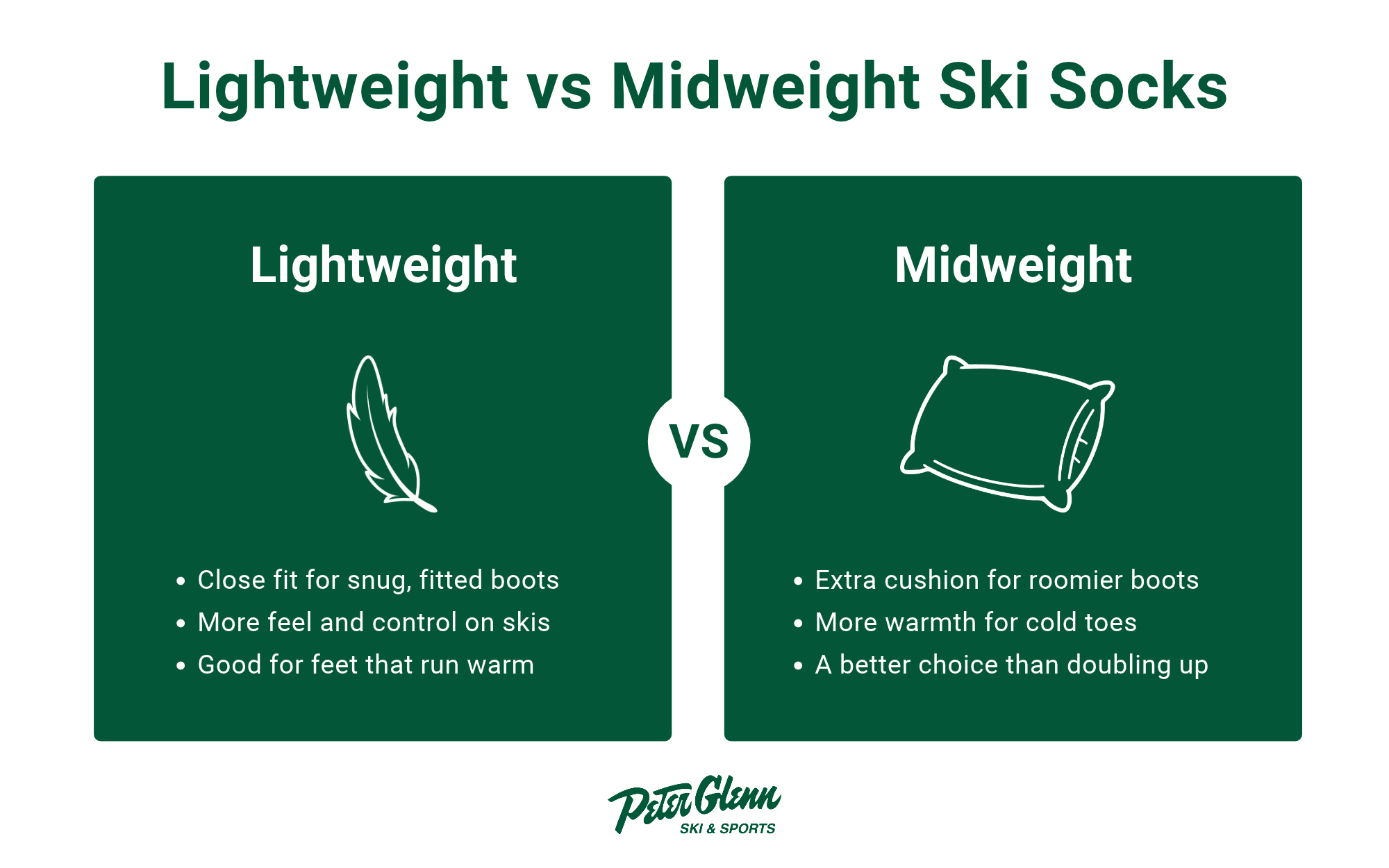
A thin sock is often the best choice for a properly fitted ski boot because it provides warmth without adding unnecessary bulk. A thick sock can make your boots feel too tight by compressing the boot liner, potentially restricting blood flow and making it harder to keep your feet warm.
If your toes start to feel numb while skiing, switching to a thinner sock may help relieve pressure and improve circulation. A thicker sock can work well if your boot has extra room, but the goal is to find a comfortable fit without creating pressure points or sacrificing warmth.
Cushioning
Cushioning in ski socks helps reduce pressure points caused by boots, especially during long days on the slopes. A targeted cushion sock provides padding in areas where your feet need additional support and protection.
- Shin: Adds cushioning against the front of your ski boots when you flex forward.
- Top of the Foot: Helps relieve pressure caused by tightened boot buckles.
- Toe Box: Provides light padding to reduce friction around your toes.
- Heel: Reinforced heels offer extra protection against friction and everyday wear.
Height and Fit
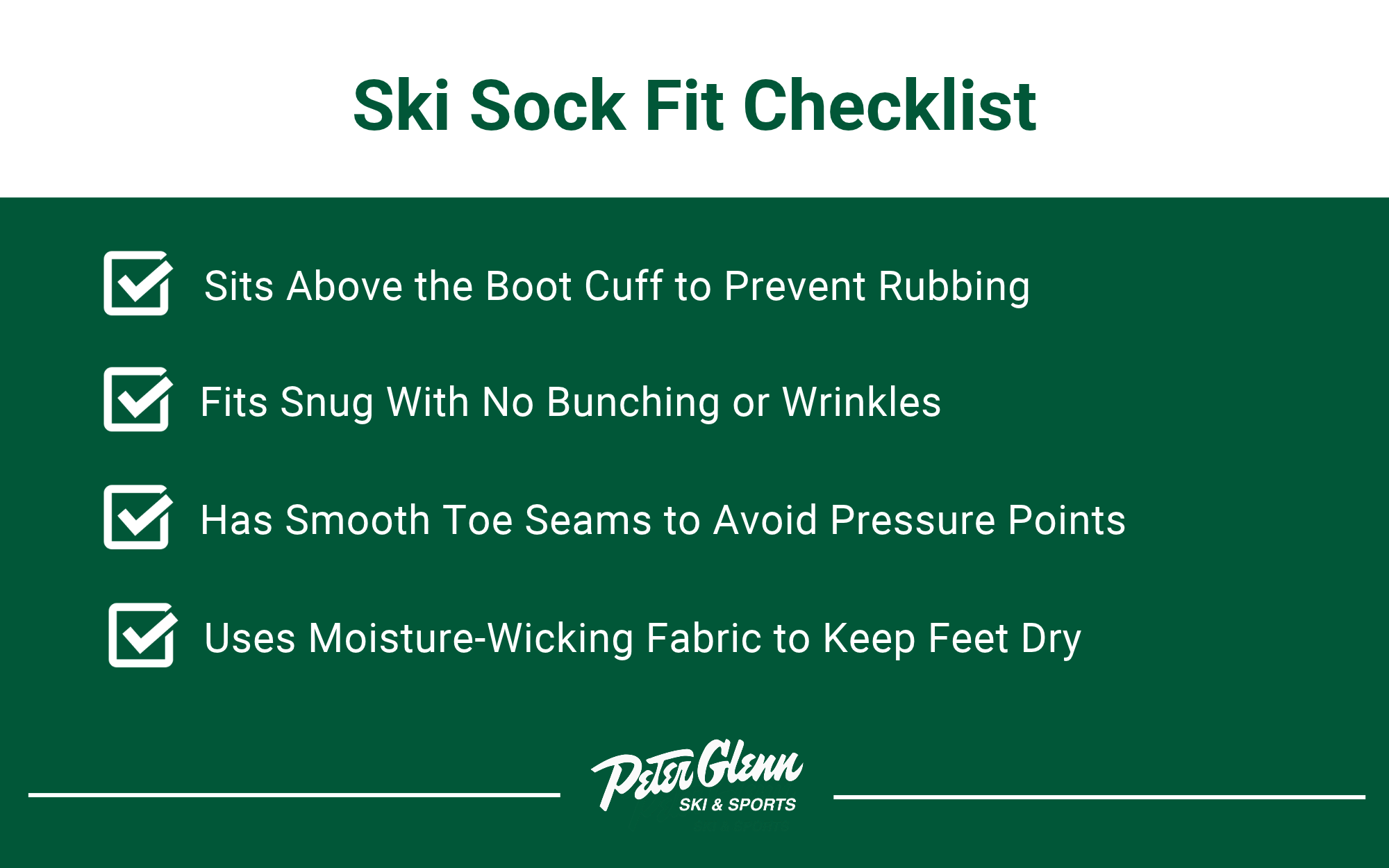
Ski socks should extend above the boot cuff to protect your legs from rubbing and irritation. If they sit too low, it can cause bunching inside your boots, so look for a snug fit with smooth toe seams that help prevent wrinkles and pressure points. Moisture-wicking properties are also important, as they help prevent sweat from building up against your skin as you ski.
Snowboarders have similar needs when it comes to sock height and fit. A snow sock should extend above the snowboard boot and provide enough cushioning for comfort throughout the day. Since snowboard boots generally have softer, more flexible liners than ski boots, a mid-cushion snow sock can be a good choice for many riders.
Jonny Moseley's Darn Tough Picks
Moseley compares two Darn Tough socks with different levels of cushioning, explaining how each affects comfort and boot fit.
Darn Tough Pennant
The Darn Tough Pennant is an ultralight ski sock designed for skiers who prefer a precise fit inside their boots. Moseley describes it as a "boot fitter sock" because of its simple design and minimal cushioning. It's especially suited for skiers who prefer a thin sock and have closely fitted boots, including those with custom foam-injection liners. The trade-off is less padding around the shin, but the lightweight construction still helps wick moisture away from your skin.
Darn Tough Function X
The Darn Tough Function X offers extra padding around areas where ski boot buckles can create pressure. Moseley appreciates the added cushioning, explaining that tightly fastened buckles can press against the top of your foot. He now prefers a thicker sock after switching to roomier boots, which gives him more space for cushioning without making the fit too tight.
Top Ski Sock Brands
Darn Tough
Made in Vermont, Darn Tough socks come with an unconditional lifetime guarantee, which Moseley considers one of the brand's biggest advantages. Peter Glenn carries several Darn Tough styles, including the models Moseley has reviewed, with prices ranging from about $30 to $34 per pair.
The Snowpack Midweight features terry loop cushioning underfoot and a snug fit that helps prevent your foot from sliding inside your boot. In his review, Moseley highlights how the knit construction helps keep your foot securely in place while skiing.
Le Bent
Le Bent combines merino wool and bamboo rayon in its ski socks, with options ranging from zero cushioning to light and targeted cushion designs. The brand also offers a compression sock designed for ski touring and long days on the mountain. These socks apply graduated compression around the foot and calf, which some skiers find helpful for reducing fatigue and improving all-day comfort. Compression options typically cost more than standard ski socks and can be harder to put on, but they may be worth considering if you ski several days in a row.
Point6
Point6 offers a wide selection of men's ski socks, women's ski socks, and kids' styles, with ultralight, light, and medium cushioning options. Made with merino wool blends, the socks feature ventilation panels that help wick moisture away from the skin, reducing sweat buildup throughout the day. Most styles are priced between $23 and $30 per pair.
Hot Chillys
Hot Chillys offers low-volume and mid-volume ski socks designed to accommodate different boot fits. Low-volume styles provide a closer fit inside a snug ski boot, while mid-volume options offer additional cushioning for boots with more room. The brand also uses moisture-wicking fabrics and features like reinforced cuffs and arch support to help socks stay in place without bunching.
Hotronic
Hotronic offers battery-powered heated socks designed for skiers who struggle with cold feet, even when wearing insulated ski boots. The built-in heating elements provide adjustable warmth, allowing skiers to control the temperature based on their needs. Although they cost more than traditional ski socks, they can be a worthwhile investment for those who have difficulty maintaining warm feet in freezing conditions.
Peter Glenn: Find Your Next Pair of Ski Socks
Peter Glenn carries more than 60 styles of ski socks from brands like Darn Tough and Point6, with options for men, women, and kids. With different cushioning levels and fits available, you can find the right sock for your boot to help keep your feet comfortable throughout a long day of skiing. While you're getting ready for your next trip, explore our selection of ski jackets and other ski gear to complete your setup.
How we write and test our guides
Reviewed by Jonny Moseley, Olympic Gold Medalist, on November 18, 2026.