


Best Ski Resorts in Montana: What to Know Before You Go
Posted by Peter Glenn Ski Experts on Nov 18th 2026
Table of Contents
- Montana Ski Resorts at a Glance
- The Two Big Destinations
- Local Favorites and Hidden Gems
- What to Pack for the Cold
- Peter Glenn: Gear Up for Your Montana Ski Trip
The Short Answer: Montana has 15 ski areas across the western half of the state, each offering a different experience depending on your preferred terrain, budget, and location. With 5,850 acres of skiable terrain, Big Sky is the largest ski area in Montana and offers access through the Ikon Pass. Whitefish Mountain features 3,000 acres of skiable terrain near Glacier National Park. Smaller ski hills like Bridger Bowl, Red Lodge, and Lookout Pass offer alternatives to the larger resorts, with more affordable lift ticket prices and a laid-back atmosphere.
Skiing in Montana offers a different experience than Colorado or Utah, with colder temperatures and smaller, less crowded ski areas. Many are located in remote parts of the state, and some have limited equipment rentals and retail options on-site. Knowing what each ski area offers ahead of time can help you plan your trip and avoid surprises when you arrive.
Montana Ski Resorts at a Glance
| Ski Area | Skiable Acres | Vertical Drop | Nearest Airport | Pass |
|---|---|---|---|---|
| Big Sky Resort | 5,850 | 4,350 ft | Bozeman | Ikon |
| Whitefish Mountain Resort | 3,000 | 2,353 ft | Kalispell | None |
| Discovery Ski Area | 2,200 | 2,388 ft | Missoula | None |
| Bridger Bowl | 2,000 | 2,600 ft | Bozeman | None |
| Red Lodge Mountain | 1,635 | 2,400 ft | Billings | Indy |
| Lookout Pass | 1,023 | 1,650 ft | Spokane | None |
| Blacktail Mountain Ski Area | 1,000+ | 1,440 ft | Kalispell | None |
| Lost Trail Powder Mountain | 1,800 | 1,800 ft | Missoula | Indy |
Season Passes
Big Sky is the only ski resort in Montana included on the Ikon Base Pass, which provides up to five days of access with blackout dates. While no Montana resorts participate in the Epic program, the Indy Pass provides access to several smaller ski areas, including Red Lodge, Lost Trail, Snowbowl, and Showdown. It's a good option for skiers planning to visit multiple locations during their trip.
Lift Ticket Prices
Lift ticket prices at larger Montana resorts vary depending on the date and demand, so booking online in advance can help you save money. Smaller ski areas tend to have more consistent daily rates and lower prices overall. If you plan to spend several days skiing in Montana, a season pass at a smaller resort may be more affordable than purchasing individual lift tickets at Big Sky or Whitefish Mountain.
The Two Big Destinations
Big Sky Resort
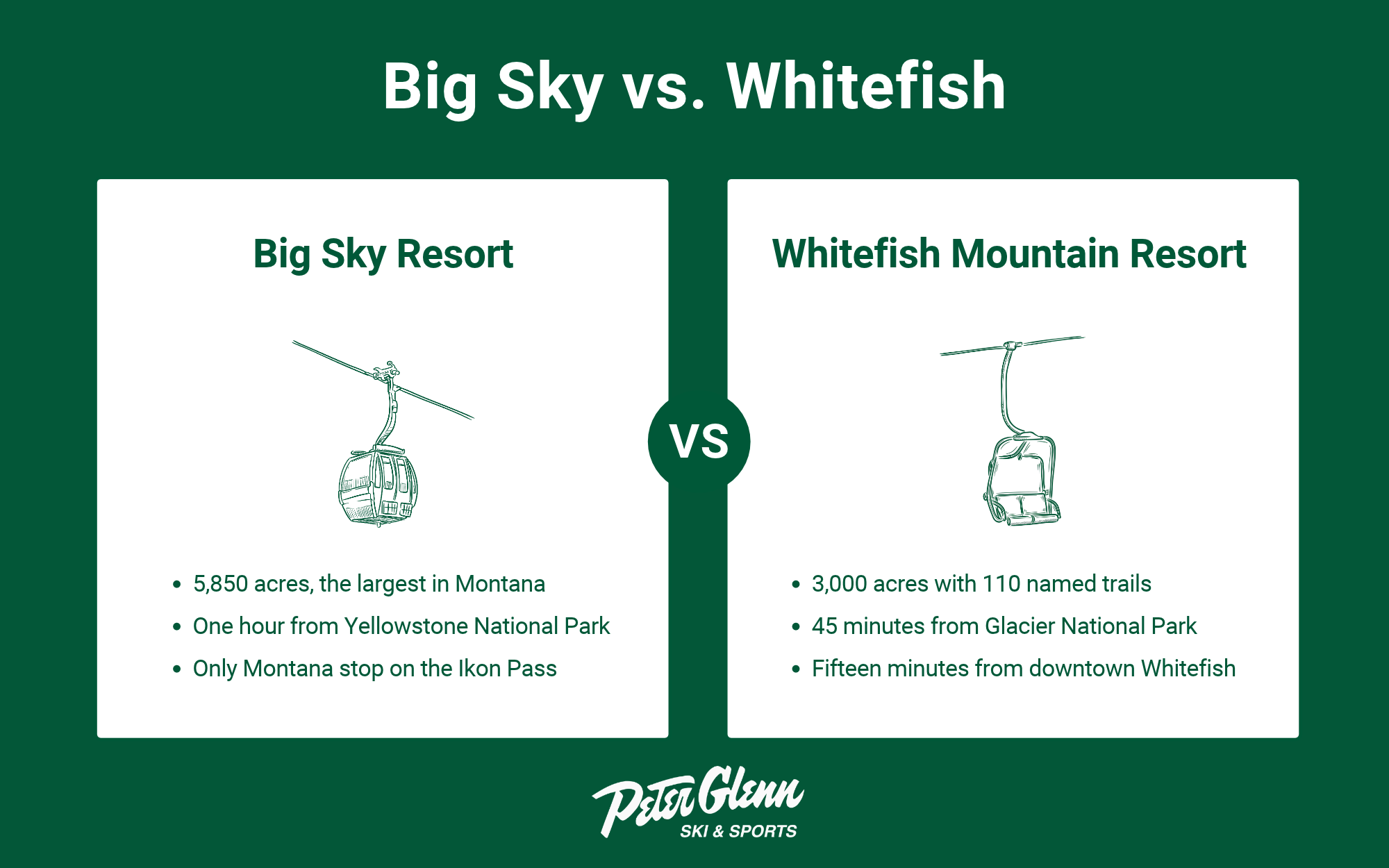
Big Sky Resort offers 5,850 acres of skiable terrain beneath the 11,166-foot summit of Lone Peak. Moonlight Basin, located on the north side of the mountain, became part of Big Sky in 2013, allowing skiers to explore both areas with a single lift ticket.
Big Sky was voted the number one ski resort in the United States by Condé Nast Traveler readers in October 2026 and continues to expand its facilities for skiers of all experience levels. The Explorer Gondola connects the base village to the Lone Peak Tram, while a new mid-station learning center provides dedicated surface lifts for first time skiers away from the main chair lift traffic. The resort also offers daily ski school lessons and a variety of ski-out condo accommodations with convenient access to the slopes.
Big Sky is about an hour from Bozeman Yellowstone International Airport and roughly an hour from the northwest corner of Yellowstone National Park.
Whitefish Mountain Resort
Whitefish Mountain Resort covers 3,000 acres on Big Mountain, overlooking the Flathead Valley. The resort features 110 named trails and 14 lifts, with a vertical drop of 2,353 feet. Whitefish receives nearly 300 inches of snow annually, providing plenty of opportunities for powder skiing, though storms moving in from the Pacific can sometimes reduce visibility on the mountain.
The resort also features four terrain parks for freestyle skiers and is just 15 minutes from downtown Whitefish, where visitors can enjoy restaurants, shops, and other activities after a day on the slopes. Glacier National Park is also nearby, with its west entrance about 45 minutes from the resort.
Local Favorites and Hidden Gems
These ski hills see fewer visitors and shorter lift lines than the two big destinations.
Bridger Bowl
Bridger Bowl is a nonprofit ski area located outside Bozeman that has been operating since 1955. The mountain covers 2,000 acres with 11 lifts, a lift-served vertical drop of 2,600 feet, and an average of roughly 300 inches of snowfall each year.
For an advanced skier, one of the biggest attractions is the Ridge, a hike-to area above the lift-served terrain known for its challenging runs and fresh powder after storms. The mountain also offers 75 marked trails for every skill level, making it a good option for groups with different skiing abilities. Unlike larger resorts, Bridger Bowl keeps its base area simple, with a focus on skiing rather than luxury amenities.
Red Lodge Mountain
Red Lodge Mountain offers 1,635 acres of skiable terrain and 70 runs, with Grizzly Peak reaching an elevation of 9,416 feet. The mountain has a vertical drop of 2,400 feet, and more than half its marked trails are rated advanced or expert, making it a great destination for experienced skiers looking for challenging terrain.
Located near Billings, the resort is just outside the town of Red Lodge, which serves as the starting point for the scenic Beartooth Highway. Visitors can enjoy the town's restaurants and local attractions, along with lift ticket prices that are generally more affordable than those at Montana's larger resorts.
Lookout Pass
Lookout Pass sits along the Montana-Idaho border, just off Interstate 90, with ski runs extending into both states. The mountain offers 1,023 acres of skiable terrain, a vertical drop of 1,650 feet, and more than 400 inches of snowfall annually.
With three terrain parks and a long-running free ski school for kids, Lookout Pass is a great option for families and skiers of different experience levels. Its location directly off Interstate 90 also makes it easy to access during a road trip, although winter storms can still affect driving conditions.
Smaller Ski Hills
Blacktail Mountain Ski Area near Flathead Lake offers a unique skiing experience, with its lodge and parking lot located at the top of the mountain rather than the base. This allows visitors to start their first run before taking a chairlift. The mountain also receives an average of 250 inches of natural snowfall each year and has a vertical drop of 1,440 feet.
Discovery Ski Area, located outside Philipsburg, offers 2,200 acres and 67 trails, with separate areas for beginner and expert skiers. Farther south, Lost Trail sits along the Continental Divide near the Idaho border, featuring 69 trails and more than 300 inches of annual snowfall. Bear Paw Ski Bowl, north of Havre, offers another unique experience as one of the few ski hills in the country located on tribal land.
What to Pack for the Cold
Montana ski areas generally experience colder temperatures than many popular resorts in Colorado and Utah, especially at smaller ski hills exposed to winds across the open prairie. With some of the more remote ski areas offering limited equipment rentals and retail options, packing all the cold-weather gear you need is especially important. The nearest town may be an hour away, so coming prepared will help you stay comfortable on the slopes without having to make an extra trip for forgotten essentials.
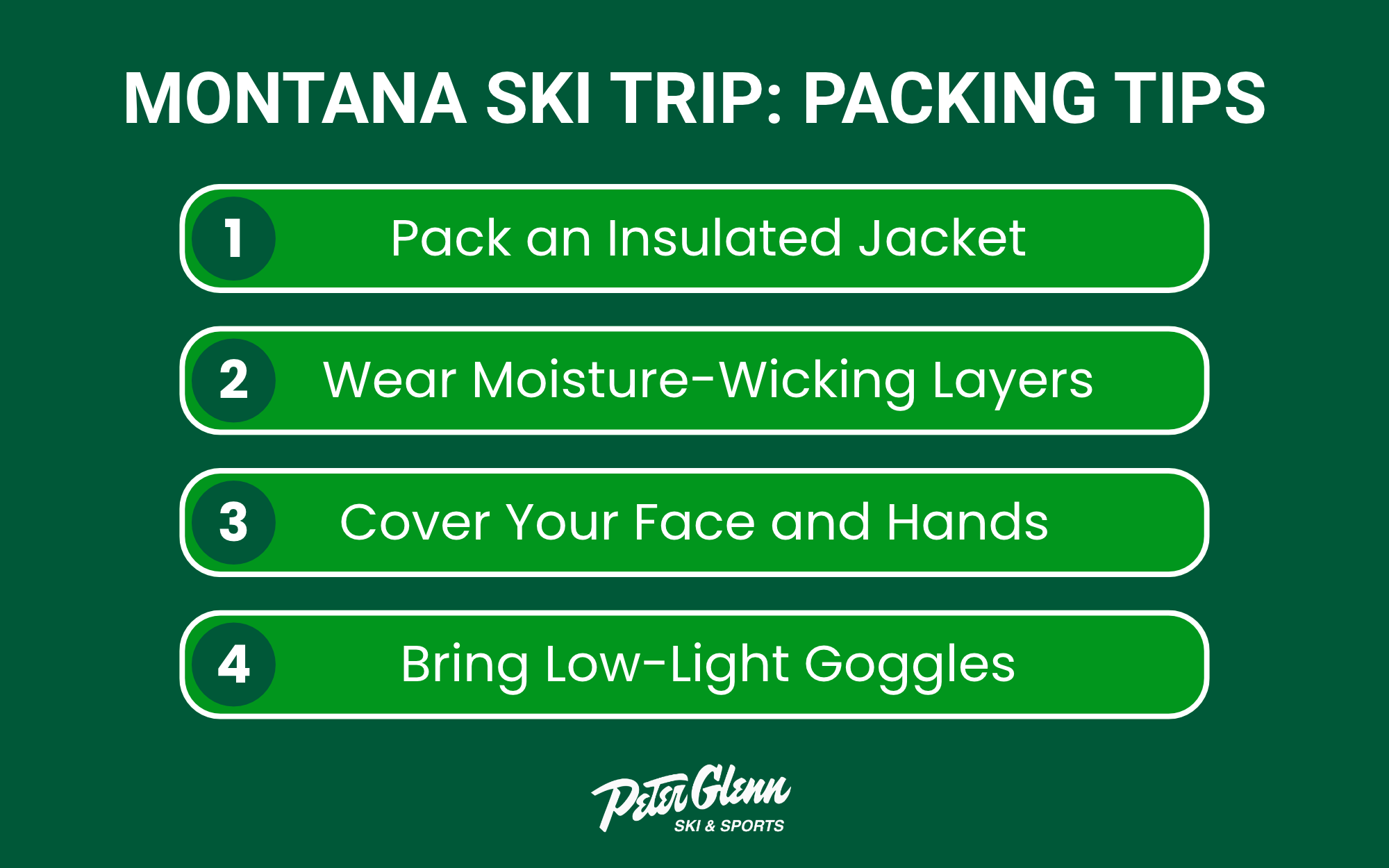
- Insulated Ski Jacket: Choose a waterproof, insulated jacket for extra warmth in Montana's colder conditions. A shell jacket can also work well with the right layers underneath.
- Ski Pants: Look for a waterproof rating of 10K or higher, with insulation to keep you warm during long chair lift rides.
- Base Layers: Choose merino wool or synthetic fabrics that wick moisture away from your skin. Avoid cotton, which absorbs sweat and can leave you feeling cold.
- Gloves and Face Coverage: Pack insulated gloves or mittens, along with a balaclava or neck gaiter to protect against cold winds on exposed ridgelines.
- Goggles: Bring goggles with low-light or interchangeable lenses to improve visibility during cloudy or snowy conditions, especially at Whitefish and Lookout Pass.
Peter Glenn: Gear Up for Your Montana Ski Trip
With Montana's cold temperatures, remote ski areas, and limited access to gear shops, having the right equipment before your trip is essential. Peter Glenn offers a wide selection of ski jackets, ski pants, base layers, gloves, and goggles designed for cold-weather conditions. Explore our full ski collection and get ready for your next Montana ski trip.
How we write and test our guides
Reviewed by Jonny Moseley, Olympic Gold Medalist, on November 18, 2026.