

Posted by Peter Glenn Staff on Mar 23rd 2026
Table of Contents
- The Basics: How Snow Forms
- Types of Snow on the Ski Slope
- Weather Patterns That Shape Snow Conditions
- What Snow Conditions Mean for Your Gear
- Ready for the Mountain? Shop Peter Glenn
At a Glance: The type of snow on the ground changes how your skis or snowboard responds and how much control you have. Knowing the difference between fresh powder and wet snow helps you pick the right day/time, the right gear, and the right approach. A run that felt light and powdery first thing in the morning might ride heavy and slow after lunch. Once you can read the snow, planning your trips and knowing what to pack gets a lot easier.
The Basics: How Snow Forms
Snow begins as water vapor high in the atmosphere. As cold air causes that vapor to condense around tiny particles, ice crystals start to take shape. These snow crystals grow as they fall through different atmospheric conditions, collecting water droplets along the way. The temperature and humidity at each stage determine the size and density of the crystals that reach the ground.
From Crystal to Snow Cover
When temperatures stay well below freezing, crystals remain light and separated. When temperatures sit closer to the freezing mark, they clump together into larger, wetter flakes. This is why the same storm can drop powdery snow at higher elevations in mountainous areas and wet snow at lower elevation zones closer to town. Billions of these crystals build the snow cover we see blanketing a mountainside.
Types of Snow on the Ski Slope
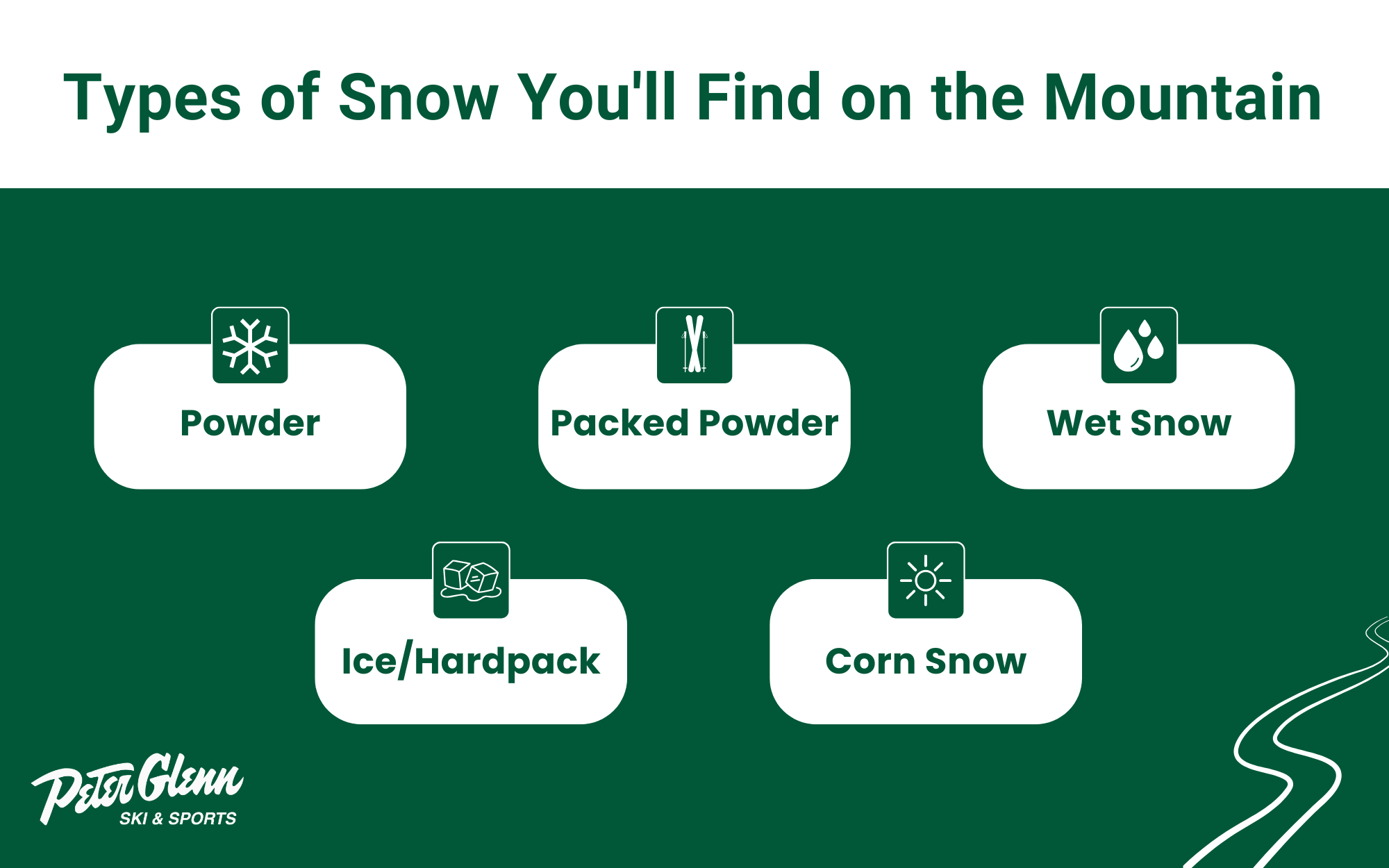
Each type of snow creates a different experience on the mountain. What you will find is: powder, packed powder, wet snow, ice/hardpack, and corn snow.
Powder Snow
Fresh powder is what most skiers and snowboarders chase. It forms when snow falls in cold, dry weather conditions, creating light, powdery snow that sits on top of existing snow cover. Fresh snow like this gives you a floating feeling and makes turns forgiving. Ski resorts in the western United States tend to get the driest fresh powder, especially at higher elevations where cold air keeps snow crystals from clumping. Utah and Colorado are known for consistently light powder thanks to their dry atmospheric conditions and high-altitude terrain.
Packed Powder
Packed powder is what you get after fresh snow has been groomed or compressed. It provides a firm, consistent surface that works well for carving and building speed. Most ski resorts groom their main runs overnight to create packed powder conditions. For beginners and intermediate skiers, packed powder is often the most comfortable and predictable surface to learn on.
Wet Snow
Wet snow forms when higher temperatures cause flakes to partially melt on the way down. The result is dense, heavy snow that sticks together. On the ski slope, wet snow is slower and grabs at your bases. It shows up in spring or during warm spells in the winter months. Wet snow is also what you see packing into snowballs easily, which is why it tends to clump on trees and power lines. Heavy snowfall of wet snow also adds weight to the snowpack, which can raise avalanche risk.
Ice & Hardpack
When snow melts during the day and refreezes overnight, it creates a hard, icy surface. Hardpack and ice are common on the East Coast of the United States, where temperature swings happen often. You will also find icy patches on high-traffic runs at any ski resort, especially later in the day. Sharp edges and an aggressive stance help you hold an edge.
Crud and Variable Conditions
Crud is the choppy, uneven snow left behind after a powder day gets tracked out. Variable snow conditions mix soft and firm patches across the same run. Both demand a centered stance and the ability to adjust quickly.
Corn Snow
Corn snow is a spring skiing favorite. It forms through repeated cycles of melting and refreezing, creating round, granular crystals that soften in the morning sun. The window for good corn is usually mid-morning to early afternoon on south-facing slopes. Hit it too early and it is still icy. Wait too long and it turns to slush.
Weather Patterns That Shape Snow Conditions
The snow that lands on a ski slope depends on the weather system delivering it. Here are the patterns worth knowing.
Winter Storms
A large winter storm can drop several inches of snow in a day or two, bringing the biggest powder days at ski resorts. The National Weather Service tracks incoming storms to help you time your trips. Cold air behind the front usually means lighter, drier snow. A violent winter storm with strong wind can create dangerous conditions on the roads, so check forecasts before driving.
Lake Effect Snow
Lake effect snow happens when cold air moves across a large, unfrozen body of water and picks up moisture. It drops heavy snowfall on areas downwind. In the northern hemisphere, this is most common near the Great Lakes during the winter months. Ski areas in lake effect zones, like those in upstate New York and Michigan, can pick up large snow totals in a short window.
Snow Squalls and Flurries
A snow squall is a sudden, intense snow event with strong wind and low visibility. These are short but can create dangerous conditions on the road and on the mountain. A snow flurry is lighter, often leaving just a thin layer.
Wind-Driven Snow
Strong wind can move snow after it falls, piling it into drifts on one side of a ridge and scouring other areas bare. Wind-driven snow often creates pockets of deep powder on the leeward side of terrain features. On exposed ridgelines, the same wind leaves behind a hard, wind-packed surface.
Snow Pellets and Ice Pellets
Snow pellets, also called graupel, form when ice crystals collect a coating of frozen water droplets. They look like small, round balls and bounce on contact. Ice pellets are smaller and harder. Neither is ideal for skiing, but they sometimes mix in during a winter storm.
What Snow Conditions Mean for Your Gear
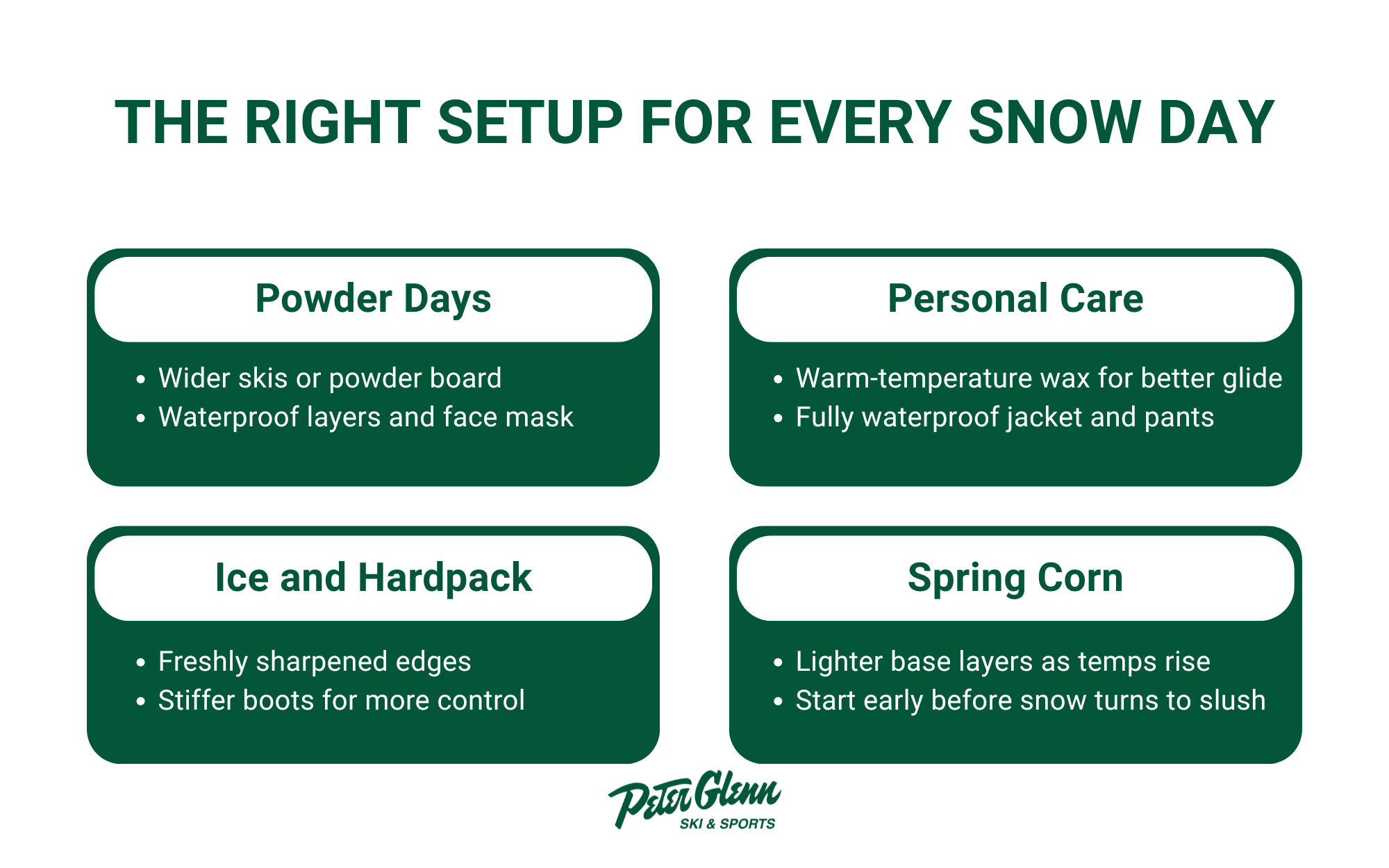
- Powder days: Wider skis or a powder board help you float. A face mask keeps snow out on deep days.
- Wet and heavy snow: A waterproof outer layer matters more when snow is dense. Use warm-temperature wax for better glide.
- Ice and hardpack: Sharpen your edges before heading out. Stiffer boots give you more control.
- Variable and crud: Mid-fat skis or an all-mountain board handle changing conditions well.
- Spring corn: Lighter base layers work as temperatures rise. Start early before the snow turns heavy.
Ready for the Mountain? Shop Peter Glenn
The right gear makes every day on the mountain better. Having the right jacket, base layer, and wax for the day keeps you comfortable and in control.
At Peter Glenn, we carry ski and snowboard apparel from top brands like Obermeyer, Patagonia, Helly Hansen, and The North Face. With over 65 years of experience, our team can help you find the right equipment for any type of snow. Shop ski jackets, pants, base layers, and accessories for men and women to get ready for your next trip.
Browse our full collection of ski and snowboard gear and gear up for the slopes now!