

Posted by Peter Glenn Staff on Apr 22nd 2026
Table of Contents
- Get Your Stance Right Before Anything Else
- Master the Pizza Stop
- How to Turn and Link Turns Together
- Keep Your Knees Flexed and Stay Centered
- Take a Lesson Early and Gear Up Right
- Peter Glenn: Gear Up for Your First Day on the Mountain
- Frequently Asked Questions
At a glance: Learning to ski starts with a few basic techniques that build on each other over time. Focus on your stance, master the pizza stop, and practice linking turns on gentle slopes before moving to more challenging terrain.
Skiing for the first time can feel overwhelming, but every skier on the mountain started exactly where you are. The good news is that downhill skiing is a skill that comes together quickly when you learn the right fundamentals from the start. Getting those basics right early prevents bad habits that take much longer to fix later on. This guide covers the core skiing techniques every beginner skier needs to know before heading to the slopes.
Get Your Stance Right Before Anything Else
Everything in skiing starts with a solid, balanced stance. Before you even think about turning or stopping, you need to be comfortable standing on your skis and feeling where your weight sits.
The Athletic Stance
A proper athletic stance on skis looks like this:
- Knees bent with your shins pressing lightly forward into your ski boots
- Weight centered over the middle of your skis, not leaning back on your heels
- Hands forward at about waist height, as if holding a steering wheel
- Eyes looking downhill toward where you want to go, not down at your ski tips
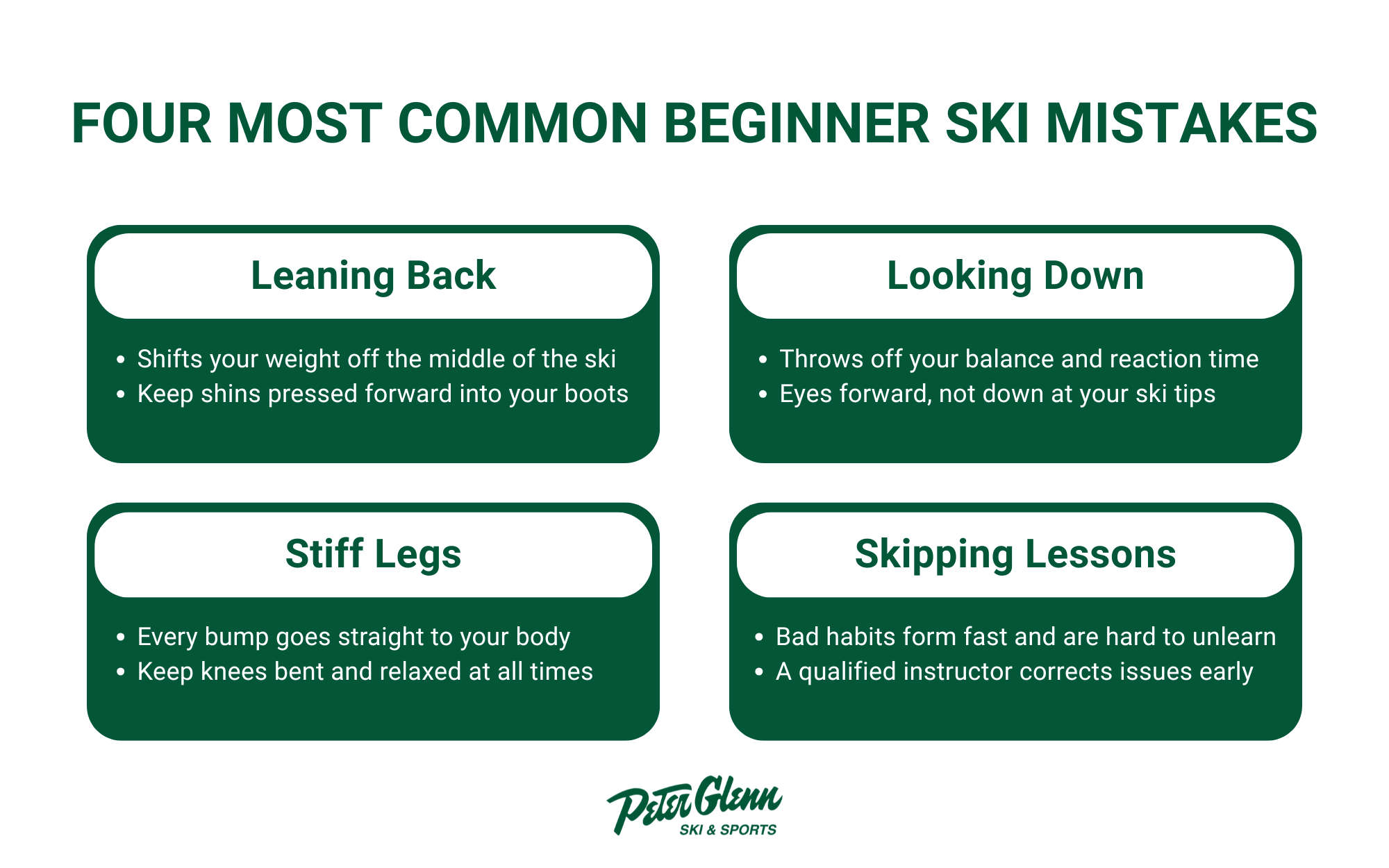
Leaning back is the most common mistake beginner skiers make. When your weight shifts behind the middle of the ski, you lose control fast. Think of the stance you would take if someone were about to throw a ball at you. That same ready position is what good ski technique looks like.
Start on Flat Terrain First
Before heading to even a gentle slope, spend a few minutes on flat terrain getting used to how your skis feel. Practice gliding, stopping, and shifting your body weight from one foot to the other. This builds the balance and body awareness that everything else depends on.
Once comfortable on flat ground, move to the gentlest slope available at the ski resort. Bunny slopes and dedicated beginner areas are there for a reason, so take full advantage of them before moving to steeper terrain.
Master the Pizza Stop
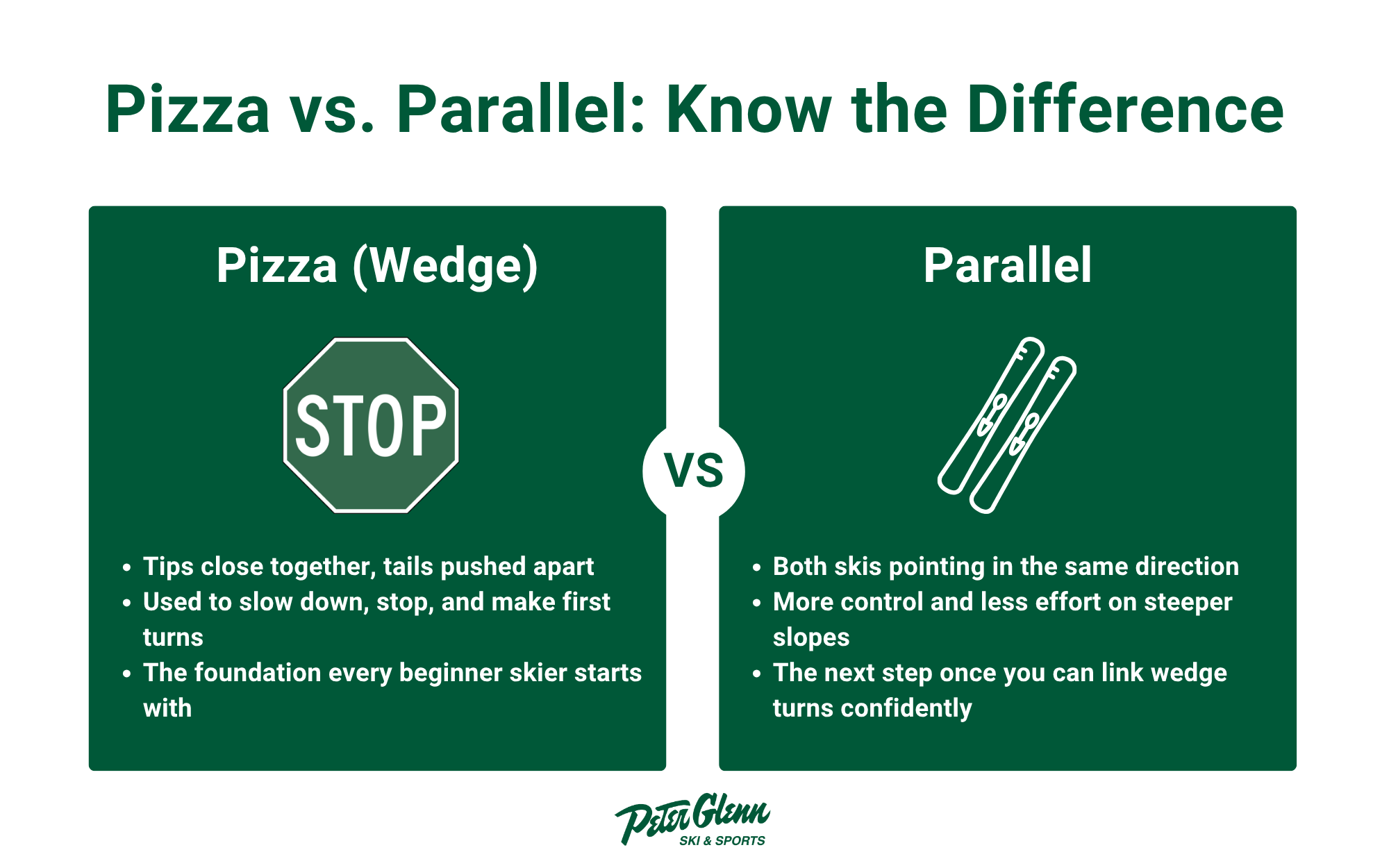
The wedge, also called the pizza position, is the foundation of beginner skiing. It is the first technique you will learn in any ski lesson and the one you will rely on most in your first days on the mountain. This breakdown of the snowplow technique covers the wedge in more detail for anyone who wants to go deeper.
How the Pizza Works
To form the pizza position, push the tails of your skis apart while keeping the tips close together. Your skis will form a triangle shape, like a slice of pizza. The wider you make the wedge, the more you slow down. Make it wide enough and you will come to a full stop.
A few things to keep in mind:
- Push the tails out rather than trying to bring the tips together
- Keep your knees slightly bent and your weight centered throughout
- Avoid letting the tips cross, which will cause a fall
- Practice on flat terrain first, then take it to a gentle slope
The pizza position is also used to make your first turns. By pressing down slightly on the inside edge of one ski, you can steer left or right. Shift more weight to the right ski to turn left, and more weight to the left ski to turn right.
How to Turn and Link Turns Together
Once comfortable with the pizza stop, the next step is learning to turn and connect those turns down the slope. This is where downhill skiing really starts to come together.
Turning on Skis
Turns are driven by body weight, not by twisting your upper body. To turn, shift your weight onto the outside ski: pressing down on your right ski steers you left, and pressing down on your left ski steers you right. Keep your upper body facing downhill and let your legs do the steering.
Linking Turns to Control Speed
One of the most important beginner ski tips is this: linked turns control your speed far better than trying to ski straight and brake at the bottom. Each turn brings you across the fall line, which naturally slows you down. Stringing smooth turns together is how intermediate and advanced skiers alike manage speed on any slope.
Start with wide, rounded turns on a gentle slope. As your confidence builds, you can tighten the turns and gradually move toward parallel skis.
Keep Your Knees Flexed and Stay Centered
Two technique habits that pay off immediately for any first-time skier are keeping your knees flexed and staying centered over your skis throughout every run.
Flexing Your Knees to Prevent Falls
Flexed knees act like shock absorbers. When you hit a bump or uneven patch of snow, bent knees allow you to absorb the change in terrain without getting thrown off balance. Stiff, straight legs transfer every terrain change directly to your body and make falls much more likely.
Staying Centered to Preserve Energy
Staying centered over the middle of your skis reduces fatigue significantly. Skiing with your weight too far back forces your legs to work overtime fighting for balance. When your weight is centered, your movements become more efficient and you can ski longer without wearing out.
Take a Lesson Early and Gear Up Right
Taking a ski lesson early in your first trip is one of the smartest things a beginner skier can do. A qualified ski instructor will watch your form, correct small issues before they become habits, and help you progress faster than you would on your own. The National Ski Areas Association also recommends taking a lesson as the single best step any first-time skier can take.
Group Lessons vs. Private Lessons
Group lessons are a cost-effective option that puts you alongside other beginners going through the same process. Private lessons move faster and focus entirely on your specific needs. Either way, your ski instructor can point you to the right terrain for your ability level and answer questions about gear.
Additional Ways to Stay Prepared
A moisture-wicking base layer is something many first-timers overlook, but it makes a real difference in comfort over a full day on the mountain. A water bottle is easy to overlook but worth bringing every time. Skiing at altitude is more physically demanding than it looks, and staying hydrated helps with both energy and performance throughout the day.
What to Expect from Your First Lesson
Most beginner ski lessons start on flat terrain and progress to a gentle slope within the first session. By the end, most first-time skiers can make basic wedge turns and control their speed well enough to come down a bunny slope safely. That foundation is all you need to keep building.
Peter Glenn: Gear Up for Your First Day on the Mountain
Learning the right skiing techniques from the start makes every run more enjoyable and every progression feel natural. Having the right gear matters just as much as the technique itself. At Peter Glenn, we carry ski jackets, ski pants, and base layers from top brands including Obermeyer, Patagonia, The North Face, and Bogner.
Browse our full collection at peterglenn.com and get geared up before your first ski lesson.
Frequently Asked Questions
What is the most important skiing technique for beginners?
A balanced athletic stance is the foundation of everything. Bent knees, weight centered over your skis, hands forward, and eyes looking downhill will set you up for every other skill you learn.
How do beginner skiers stop?
The pizza or wedge position is the standard stopping technique for beginner skiers. Push the tails of your skis apart to form a triangle shape. The wider the wedge, the faster you stop.
Should I take a ski lesson as a beginner?
Yes. A qualified ski instructor can catch errors in your technique early and help you build proper habits from the start. Group lessons are a great option for first-time skiers.
How do I control my speed as a beginner?
Linking turns is the most effective way to control speed. Each turn across the fall line slows you down naturally. The pizza wedge position can also be used to slow down or stop when needed.
What should I wear for my first ski lesson?
A moisture-wicking base layer is a good starting point, keeping you dry and comfortable throughout the day. Layer up with insulating mid-layers and a waterproof ski jacket on top. Do not forget a helmet, ski boots, and a water bottle to stay hydrated on the mountain.