


Posted by Peter Glenn Gear Testing Team on Jun 22nd 2026
Table of Contents
- Prep Your Skis Before You Store Them
- Best Ski Storage Ideas for Your Home
- Where to Store Your Skis
- How to Store the Rest of Your Ski Gear
- Peter Glenn: Gear Up for Next Season
- Frequently Asked Questions
The Short Answer: The best ski storage ideas start with having the right rack for your space and include proper end-of-season prep. Clean your skis, apply storage wax, and choose a wall-mounted, freestanding, or ceiling rack that keeps gear organized and protected until next season.
Ski season may be over, but how you store your gear between now and next winter makes a real difference. Poor storage leads to rusted edges, dried-out bases, cracked boot liners, and gear that needs expensive repairs before you even hit the slopes again. The good news is that a solid ski storage setup does not take much time or space to get right. This guide covers the best ski storage ideas for every home, plus what to do before you put anything away.
Prep Your Skis Before You Store Them
Before thinking about racks or storage space, the gear itself needs proper care. Skis stored dirty, wet, or unwaxed are at risk of rust, oxidation, and base damage over the months they sit unused.
Clean and Dry First
Wipe down the topsheets and remove any dirt or grime from the base. Dry the edges completely, paying close attention to moisture near the bindings. Spring skiing often means wet, dirty snow, and letting that residue sit on your skis all summer can accelerate edge rust and base deterioration.
Apply Storage Wax
Storage wax is one of the most important steps before putting skis away for the season. Apply a warm wax to the base with an iron, spread evenly, and leave it unscraped. The wax seals the base and edges from oxygen and moisture, preventing the polyethylene from drying out over the off-season. When winter returns, scrape and brush before your first day on snow. Swix, a leading ski wax brand, recommends applying a protective layer of glide wax before storing skis for the season and leaving it unscraped until winter returns.
Check for Damage
The end of ski season is the best time to address base scratches, edge burrs, or binding issues. Fixing small problems now prevents them from worsening over summer and means your pair of skis is ready to go when next ski season arrives.

Best Ski Storage Ideas for Your Home
Wall-Mounted Ski Racks
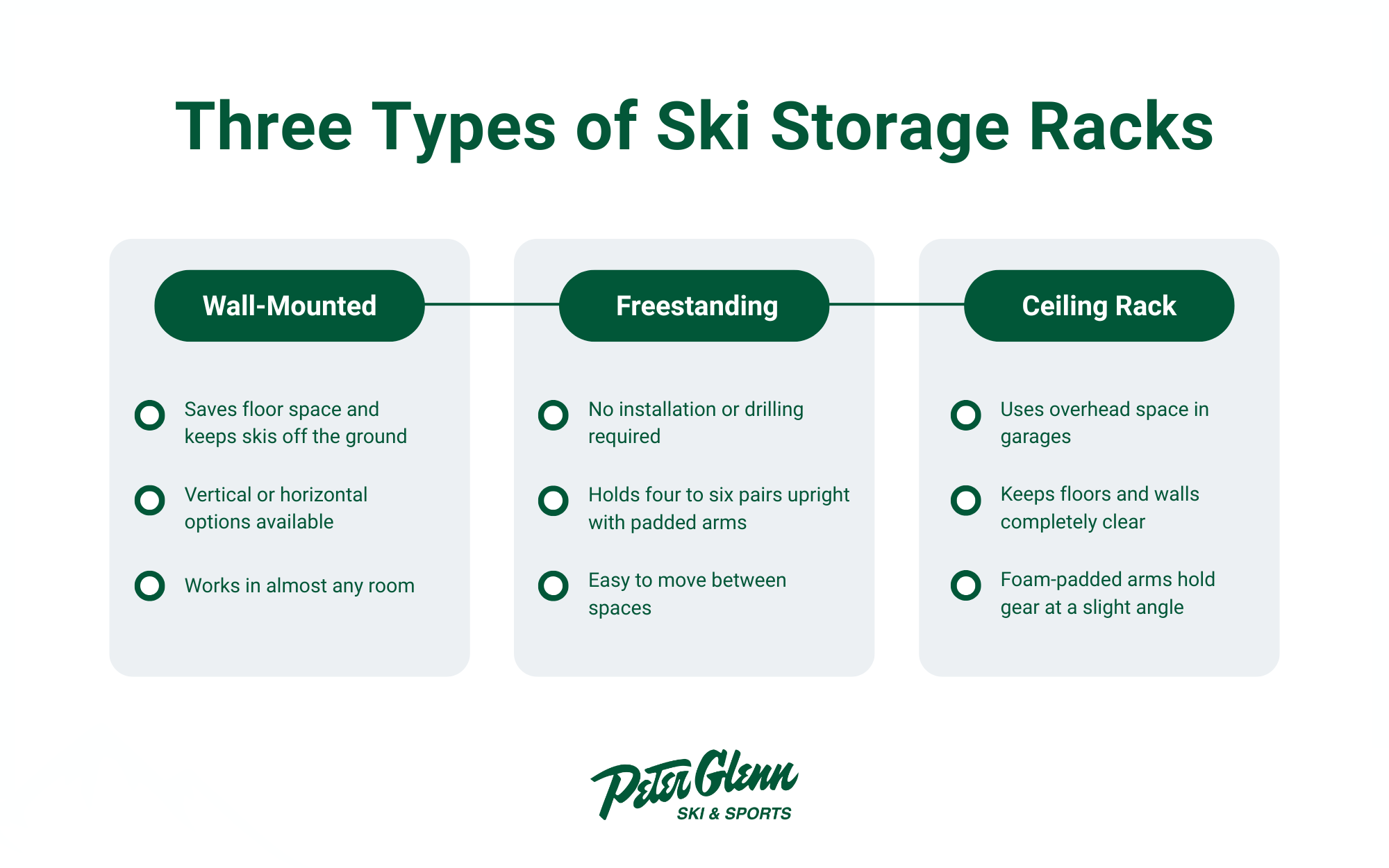
A wall-mounted rack is one of the most popular ski storage ideas because it keeps skis off the ground, saves floor space, and works in almost any room. Vertical wall racks store skis upright and help preserve natural rocker and camber. Horizontal wall racks are a better solution when you have both skis and snowboard storage needs, since adjustable arms can handle a wider mix of gear in one setup.
For a cleaner indoor look, display racks made from natural wood or clear acrylic mount directly to the wall, turning your skis into part of the room's decor.
Freestanding Ski Racks
A freestanding rack is a practical storage solution for homes with multiple pairs of skis. Most freestanding racks hold four to six pairs upright with padded arms to protect the sidewalls, and since no installation is required, they are easy to move between spaces. A heavy duty plastic or steel frame with rubber padding is the standard construction for quality options.
Ceiling Racks
Ceiling racks are the best ski storage solution for garages with limited wall space. By using overhead space, they keep skis completely out of the way and free up both floors and walls for other gear. Most models feature foam-padded arms set at a slight angle to hold equipment securely. Look for a rack system with adjustable arm spacing to accommodate different ski widths and pole storage in the same setup.
Quick Comparison: Ski Storage Rack Types
|
Rack Type |
Best For |
Space Used |
Installation |
|
Wall-Mounted Vertical |
Saving floor space, preserving camber |
Wall space |
Required |
|
Wall-Mounted Horizontal |
Mixed ski and snowboard storage |
Wall space |
Required |
|
Freestanding |
Multiple skiers, no drilling needed |
Floor space |
None |
|
Ceiling Rack |
Garages with limited wall space |
Overhead space |
Required |
|
Display Rack |
Indoor storage, aesthetic setup |
Wall space |
Required |
Where to Store Your Skis
The biggest risks to ski gear in storage are moisture, heat, and direct sunlight. The garage is the most common location and works well for most setups, though skis should stay off the concrete floor where moisture can collect along the edges. A wall-mounted or ceiling rack keeps them elevated and protected.
A basement is a solid alternative but watch for humidity. High moisture in an unfinished basement will rust edges even through a coat of storage wax. If your basement runs humid, a dehumidifier or sealed gear bag adds useful protection.
A climate-controlled closet or spare room is the best long-term storage option, keeping skis in conditions that are cool, dry, and away from light. Avoid attics, which can get extremely hot in summer, and any spot with direct sunlight. Toko, a ski wax and care brand, notes that direct UV radiation from sunlight is harmful to the plastics in both ski bases and top sheets.
How to Store the Rest of Your Ski Gear
Ski Boots
Store ski boots loosely buckled to maintain liner shape and prevent shell warping, and keep them in a boot bag to protect from dust and temperature swings. A boot dryer is also worth having, as it removes residual moisture from the liner, prevents odor, and extends the life of the boot. Peter Glenn carries boot warmers and dryers for skiers who want a dedicated solution. The National Ski Areas Association also recommends storing boots in a temperature-controlled location to protect the liner and shell over the off-season.
Ski Poles
Poles are easy to store. Hang them from the straps on a wall rack, lean them upright in a gear closet, or use a dedicated hook or bungee cord in your storage setup. Since they don't take up much room, they are usually the easiest part of a ski gear setup to organize.
Helmets, Goggles, and Accessories
Store helmets on a shelf or in a helmet bag away from heat, and keep goggles in a microfiber case to protect the lens from scratches and UV damage. Gloves and base layers should be washed and fully dried before storage to prevent mildew.
Ski Jackets and Outerwear
Clean and fully dry ski jackets before storing for summer, then hang them upright rather than folding or compressing. Long-term compression can damage waterproof membranes and insulation, so a cool, dry space away from direct sunlight is the best place to keep them.
Peter Glenn: Gear Up for Next Season
Taking care of your ski gear now means less hassle and more time on the mountain when next season arrives. At Peter Glenn, we carry ski jackets, ski boots, helmets, goggles, and everything else you need for the mountain. Browse our full ski collection and get set for next season.
Frequently Asked Questions
What is the best way to store skis at home?
A wall-mounted vertical rack is the most popular option because it saves floor space, preserves rocker and camber, and works in garages, mudrooms, and basements. Keep skis elevated, dry, and away from direct sunlight and heat.
Should I wax my skis before storing them?
Yes. A coat of storage wax left unscraped is one of the most important steps before putting skis away. It seals the base and edges from moisture and oxygen, preventing drying and rust over the summer.
Can I store skis in my garage?
Yes, but keep them off the concrete floor and away from direct sunlight. A wall-mounted or ceiling rack is a better solution than leaning skis against a wall or leaving them on the floor.
How should I store ski boots between seasons?
Store boots loosely buckled in a boot bag, away from heat and moisture. A boot dryer removes residual moisture and helps maintain liner shape and boot integrity over the off-season.
Do I need a special rack for ski storage?
Not necessarily, but a dedicated ski storage rack makes a real difference. A proper rack keeps skis elevated, protected, and organized. Wall-mounted, freestanding, ceiling, and display racks are all solid options depending on your available space.
How we write and test our guides
Reviewed by Jonny Moseley, Olympic Gold Medalist, on June 22, 2026.