
Posted by Peter Glenn Staff on Oct 18th 2026
Table of Contents
- Park City vs. Deer Valley at a Glance
- Park City Mountain
- Deer Valley Resort
- What to Pack for Utah Skiing
- Peter Glenn: Gear Up for Your Utah Ski Trip
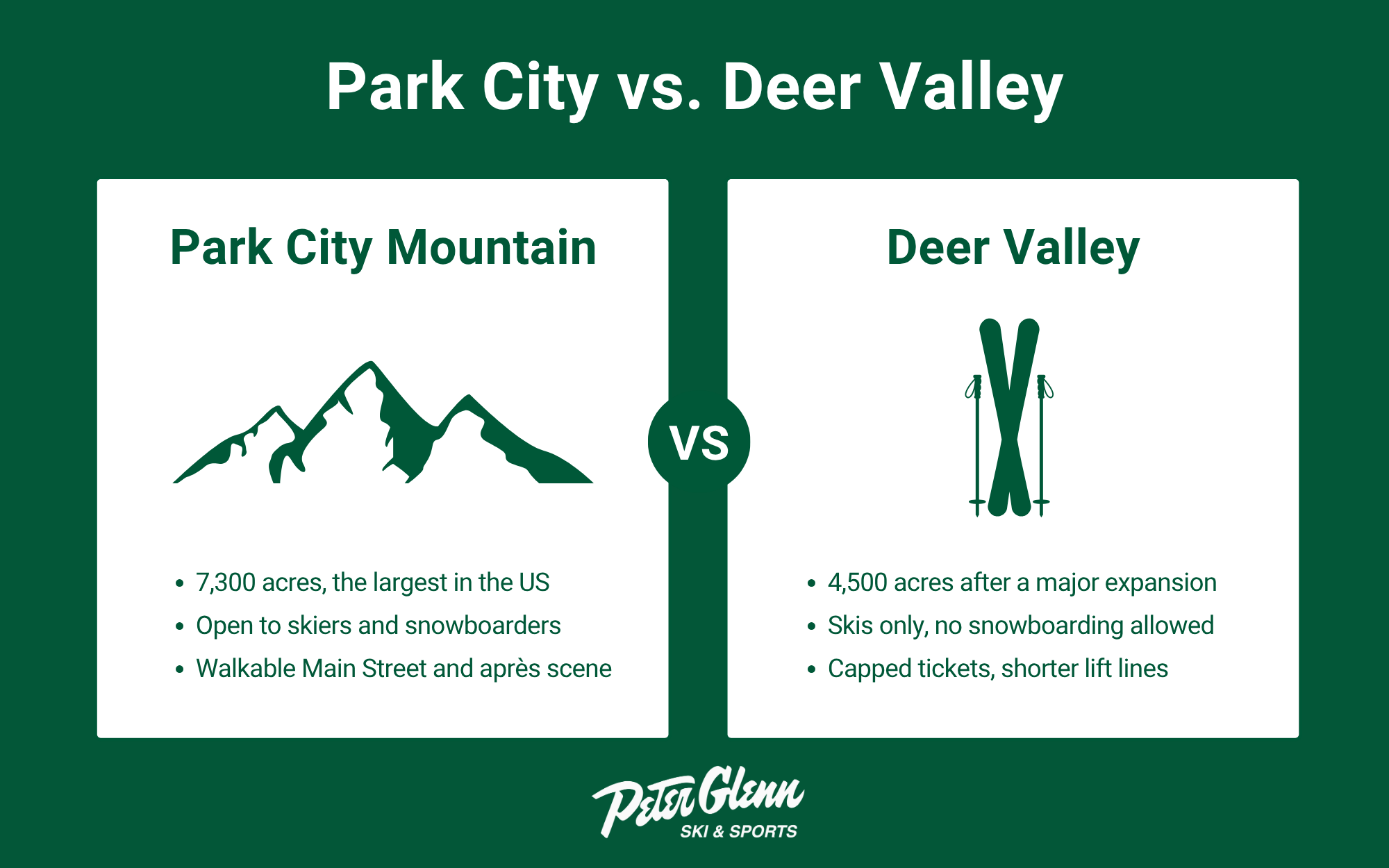
The Short Answer: Choosing between Park City Mountain and Deer Valley comes down to resort size, crowds, and whether anyone in your group snowboards. Park City Mountain is the largest ski resort in the United States, offering 7,300 acres of terrain for both skiers and snowboarders. Deer Valley offers a ski-only experience with 4,500 acres of terrain following its recent expansion. It also limits daily lift ticket sales to help manage crowds and provide a more relaxed experience on the mountain.
The two resorts are located just minutes apart in Park City, Utah, about 45 minutes from Salt Lake City International Airport. While their proximity makes them easy to compare, they offer very different skiing experiences. Understanding those differences can help you decide which mountain is the better fit for your next ski trip.
Park City vs. Deer Valley at a Glance
| Comparison | Park City Mountain | Deer Valley Resort |
|---|---|---|
| Skiable acres | 7,300 | 4,500* |
| Lifts | 41 | 32* |
| Runs | 330+ | 209* |
| Vertical drop | 3,226 ft | 3,120 ft |
| Snowboarding | Yes | No |
| Pass | Epic | Ikon |
| Peak single-day ticket | ~$369 | ~$349 |
| Daily ticket limit | No | Yes |
| Day skier parking | Mostly paid | Free self-parking |
*Deer Valley's acreage, lift, and run counts reflect the 2026/27 East Village expansion. Older sources list the legacy footprint of roughly 2,026 acres, and later phases of the build-out will add more.
Park City Mountain
Park City Mountain became the largest ski resort in the United States in 2015, when it connected with the neighboring Canyons ski area through the Quicksilver Gondola. The combined resort now spans 7,300 skiable acres across two base areas.
Terrain and Skill Level
With more than 330 runs and 41 ski lifts, Park City offers terrain for every skill level. Beginners can learn at dedicated areas near Mountain Village and Canyons Village, while intermediate skiers can enjoy long, groomed runs across both sides of the mountain. Advanced skiers can explore the steep bowls and challenging chutes around Jupiter Peak, especially after fresh snowfall.
Park City also has seven terrain parks and a 22-foot superpipe returning for the 2026-27 season, giving freestyle skiers and snowboarders plenty of options. The resort averages 355 inches of snow annually, helping support a long skiing season. A new 10-person Skyway gondola will also replace the open-air Cabriolet at Canyons Village for the upcoming winter.
Main Street and Town Access
The Town Lift connects directly to Park City's historic Main Street, making it easy to stop for lunch before heading back up the mountain. Unlike a traditional ski village, downtown Park City has its own restaurants, shops, and lively après-ski scene. Staying nearby also gives you easy access to local dining, mountain views, and the slopes the next morning. During the summer, visitors can enjoy the alpine coaster, mountain biking, and nearby hiking trails.
Deer Valley Resort
Deer Valley built its reputation on grooming and service. It is one of the few resorts in the United States that does not allow snowboarding, and it sells a limited number of lift tickets each day to keep crowds down.
What the Expansion Added
Deer Valley is undergoing one of the largest ski area expansions in United States history. Since December 2024, the resort has added 11 new lifts and more than doubled its skiable acres. The new East Village base area also provides another way to access the mountain, with runs overlooking Jordanelle Reservoir.
For the 2026-27 season, the new Hail Peak Express will open 200 acres of new terrain and seven runs, bringing the resort to 4,500 skiable acres. Deer Valley will have 32 lifts and 209 runs, including a 4.8-mile trail, with snowmaking covering 932 acres. While Park City still offers more terrain, Deer Valley's expansion has narrowed the gap and given it more skiable acres than Jackson Hole.
Service, Crowds, and Lodging
Deer Valley is known for its attentive service, upscale amenities, and more relaxed atmosphere compared to larger ski resorts. While lift lines can still get busy during peak periods, the resort's focus on guest service is a major draw for visitors.
Silver Lake Village is located mid-mountain and offers convenient access to the resort's dining options. Accommodations like Stein Eriksen Residences and Montage Deer Valley offer luxury lodging with ski-out access. Deer Valley also provides complimentary daytime and overnight ski storage at several locations, so you can leave your skis at the mountain without making a reservation.
How to Choose Between Them
Choosing between the two resorts depends on who's in your group, which ski pass you have, and what kind of experience you're looking for.
Choose Park City Mountain if:
- Anyone in your group snowboards, since Deer Valley does not allow it
- You want access to more terrain with a single lift ticket
- Terrain parks or expert terrain like Jupiter Peak are a priority
- You want easy access to restaurants and nightlife along Main Street
- You already hold an Epic Pass
Choose Deer Valley Resort if:
- You value well-groomed runs, attentive service, and a more relaxed atmosphere
- You're traveling with a group of skiers who prefer groomed trails
- You want premium ski lodging with ski-out access
- You already have an Ikon Pass
- Everyone in your party skis
Cost and Passes
Peak single-day lift tickets cost up to $369 at Park City and $349 at Deer Valley for the 2026-27 season. Both resorts use dynamic pricing, so booking in advance or choosing less popular dates can help you save.
Parking is another factor to consider, with free and paid options available at both resorts. Deer Valley offers free self-parking at Snow Park and East Village, while Park City has select free lots and a $29 daily rate at the new Canyons Village garage. Most Mountain Village lots also require paid reservations during peak morning hours. For those planning to visit both mountains, free Park City Transit buses offer a convenient way to travel between them.
What to Pack for Utah Skiing
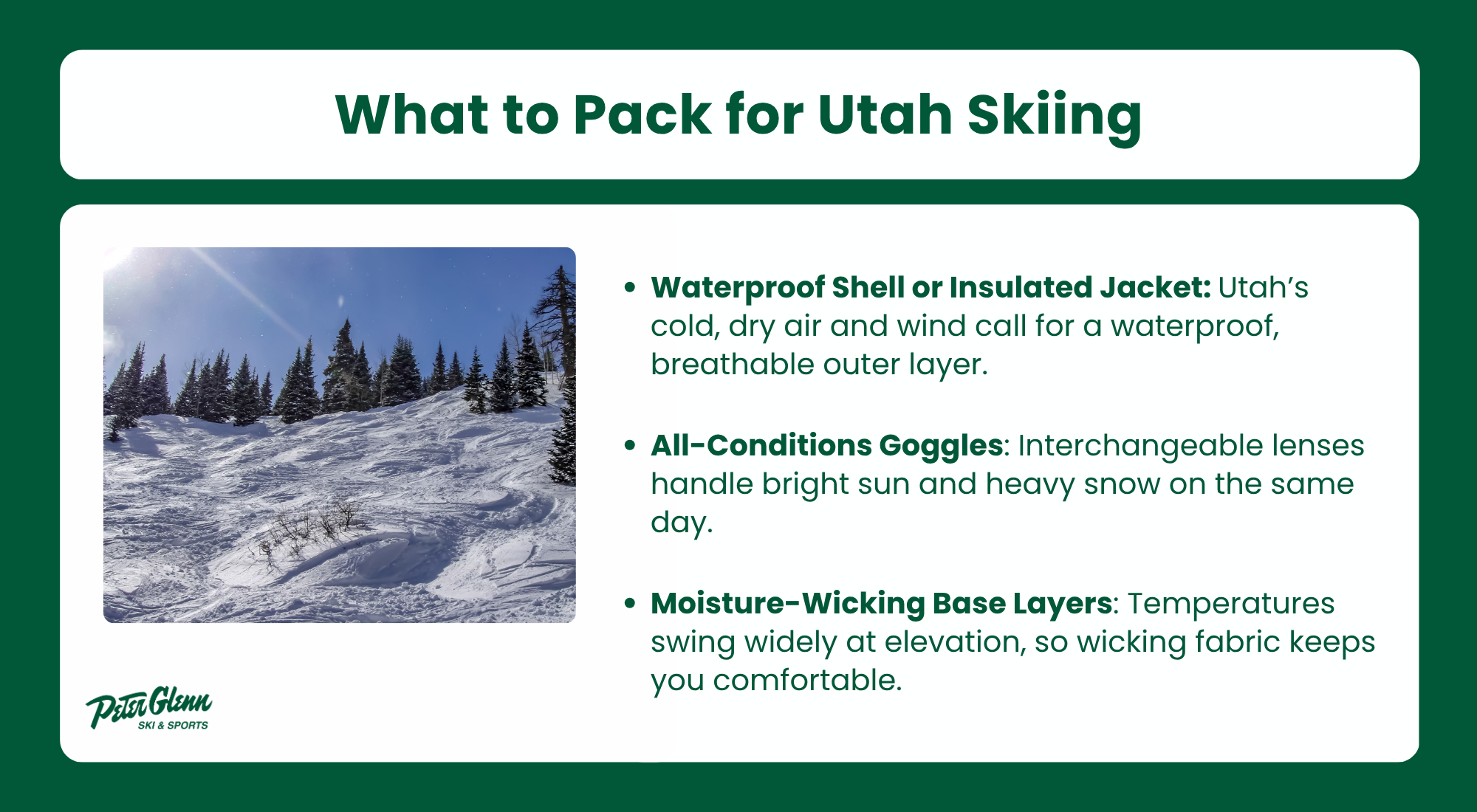
Utah is known for its light, dry snow, but conditions can change throughout the day. With mountain elevations above 6,000 feet, skiers should prepare for cold temperatures, strong sun, and changing weather. Here's what to bring:
- Ski Jacket: Pack a waterproof, breathable shell or insulated jacket to stay warm and protected from snow and wind.
- Ski Goggles: Choose goggles with interchangeable lenses or an all-conditions lens for both sunny and snowy days.
- Base Layers: Wear moisture-wicking base layers to help manage sweat and stay comfortable as temperatures change.
- Gloves and Sun Protection: Bring insulated gloves, sunscreen, and SPF lip balm to protect against cold temperatures and strong UV rays at higher elevations.
Peter Glenn: Gear Up for Your Utah Ski Trip
A ski trip to Park City or Deer Valley is more enjoyable when you're prepared for changing mountain conditions. Peter Glenn carries ski jackets, ski pants, goggles, gloves, and base layers to help you stay warm and comfortable on the slopes. Explore our full ski collection to find everything you need for your next trip.