
Posted by Peter Glenn Gear Testing Team on Mar 23rd 2026
Table of Contents
- Why Ski Goggles Fog Up
- How to Prevent Goggle Fog on the Mountain
- Anti-Fog Features and Technology
- Goggle Care and Storage
- Ready for the Mountain? Shop Peter Glenn
The Short Answer: Goggle fog happens when warm, moist air from your face hits a cold lens and turns into condensation. The easiest way to prevent it is to keep air moving through your goggles, avoid wiping the inner lens, and let your goggles dry completely between uses.
Foggy goggles are one of the most common frustrations on the mountain. You are halfway down a run, and suddenly your vision goes white. The good news is that most fogging is preventable. A few simple habits and the right pair of goggles go a long way toward keeping your lenses clear all day.
Why Ski Goggles Fog Up
Goggle fog comes down to one thing: condensation. When warm air from your face meets a cold lens surface, the water vapor in that air turns into tiny water droplets. Those droplets scatter incoming light instead of letting it pass through cleanly, which is why the lens appears cloudy or white. The bigger the temperature difference between the inside and outside of your goggles, the faster fog will form. Even the best anti fog features cannot fully overcome poor ventilation or trapped moisture.
Where the Moisture Comes From
Your body produces heat and moisture constantly, especially during physical activity. Skiing and snowboarding raise your body temperature quickly, and most of that excess heat escapes through your head and face. If you are wearing a helmet, jacket, and face mask, the warm air and humid air get funneled toward your goggles. That moisture buildup on the cold lens is what causes fog to form in the first place.
The Role of Temperature
Cold air on the outside of the lens and body heat on the inside create the conditions for condensation. On colder days or in changing weather conditions, that temperature difference is more pronounced. Sitting on a chairlift after a hard run is one of the most common times for your goggles to fog up because your body is still producing heat while cold air hits the lenses.
How to Prevent Goggle Fog on the Mountain
Most fogging problems come from habits, not faulty gear. Here are the most effective ways to keep your ski goggles clear while you ride.
Keep the Vents Clear
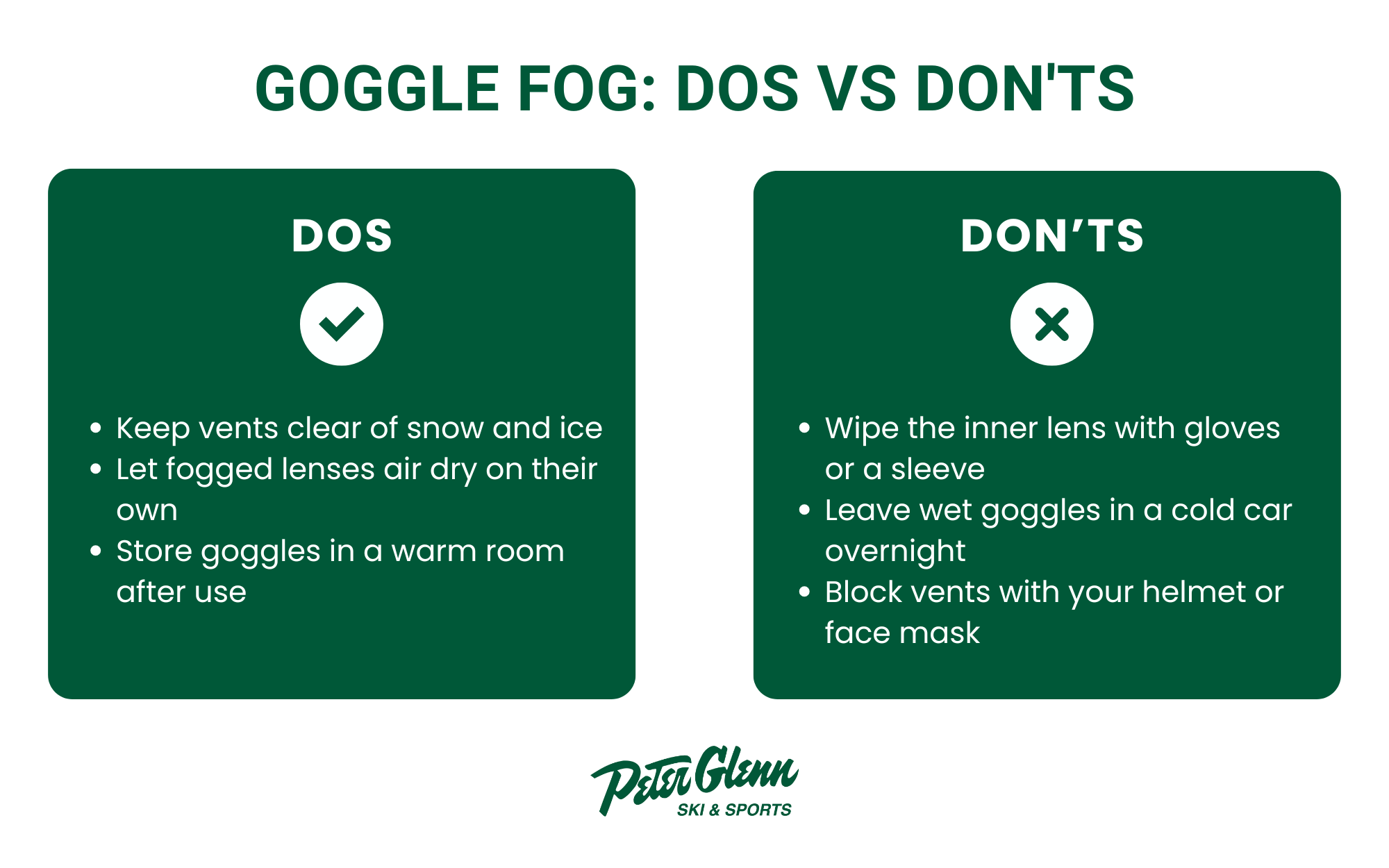
Every pair of goggles has vents along the top and bottom of the frame. These allow moist air to escape and cold air to circulate. If snow, your helmet, or a face mask blocks these vents, moisture gets trapped, and fog builds up fast. After a fall, knock the snow off the vents before heading back downhill.
Do Not Wipe the Inner Lens
This is the most common mistake. When fog appears, it is tempting to wipe the inside of the lens with a glove or jacket sleeve. Doing this can scratch the lens surface and damage the anti-fog coating applied at the factory. If your goggles fog up, pull them away from your face for a few seconds and let the air dry the moisture. A microfiber cloth can be used to gently blot the inner lens as a last resort, but wiping should always be avoided.
Manage Your Body Heat
Overdressing is a major cause of fogging. If you are running hot, open your jacket vents or shed a layer. Reducing your body temperature lowers the amount of warm air and moisture escaping through your face.
Position Your Face Mask Correctly
A face mask or neck gaiter that sits too high can direct your breath straight up into your goggles. Pull it down just below the bottom edge of the goggle frame so exhaled air exits downward. Some brands make masks designed to work with goggles, using magnets or a shaped nose piece to create a secure connection that routes warm air away from the lenses.
Make Sure Your Goggles Fit
A proper goggle fit does more than just feel comfortable. Goggles that sit too tight against your face compress the foam and block airflow. Goggles that are too loose let cold air rush in and create gaps where moist air gets trapped. The foam should seal evenly around your face without pinching, and the frame should sit flush against your helmet without covering or blocking any vents. Pairing goggles and a helmet from the same brand often helps because their vent systems are designed to line up and work together.
Anti-Fog Features and Technology
Modern ski goggles include several features specifically designed to fight fog. If you are shopping for a new pair, these are the things to look for.
Double Lenses
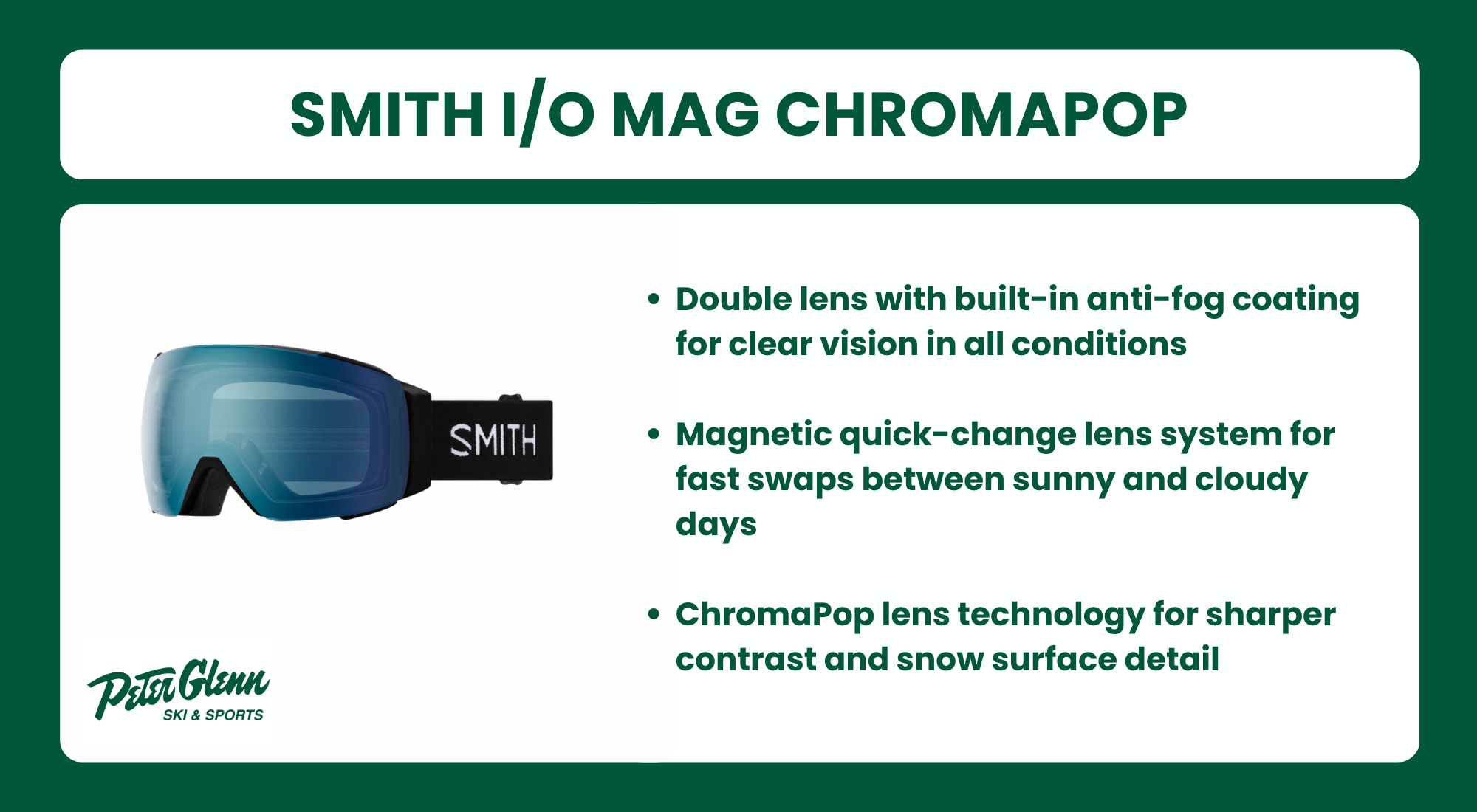
Most quality goggles use a double lens design, which works like a double-pane window. The air pocket between the two lenses creates an insulating barrier that reduces the temperature difference between the inside and outside surfaces. Goggles sold in the U.S. are typically tested to ASTM safety standards, and double lens construction is now common at every price point. The result is a clear vision that lasts longer, even on cold days.
Anti-Fog Coating and Treatments
Nearly all modern goggles come with an anti-fog coating applied to the inner lens at the factory. The National Ski Areas Association notes that goggle-to-helmet fit plays a direct role in ventilation and fog prevention. These coatings reduce surface tension, which causes water molecules to spread into a thin, even film instead of forming visible water droplets that block visibility. Over time, this anti-fog treatment can wear down, especially if the inner lens is wiped or touched frequently. Some riders extend the life of their goggles by applying an anti-fog spray. A hydrophobic coating on the outer lens can also help by repelling water and snow from the outside.
Anti-Fog Technology
Some goggle brands have gone further with built-in anti-fog technology. Heated lens systems use a small battery to warm the lens and prevent condensation from forming. Others use ventilation channels built into the frame to keep air flowing even when you are standing still. These features make it much harder for moisture to form fog on the lens surface.
Goggle Care and Storage
How you treat your goggles off the mountain matters just as much as what you do on it.
Dry Them Out After Every Use
Wet goggles left in a cold car or stuffed into a ski bag overnight will fog up almost immediately the next morning. Bring your goggles inside and let them air dry in a warm room. Do not use a hand dryer or blow dryer because the heat can damage the lens and the anti-fog treatment. Set them on a clean surface with the lenses facing up and let time do the work.
Store Them Properly
Keep your goggles in a microfiber cloth bag or hard case when not in use. This protects the lenses from dust, scratches, and contact with other gear. Avoid touching the inner lens with your fingers because oils from your skin can break down the anti-fog coating over time.
Know When to Replace
If your pair of goggles is several seasons old and fogging has gotten worse despite good habits, the anti-fog coating has likely worn off. The bottom line is that a new pair of goggles with fresh anti-fog treatment will perform better than any aftermarket spray on an old lens.
Ready for the Mountain? Shop Peter Glenn
Goggle fog is frustrating, but it is also one of the easiest problems to fix. The right pair of goggles with solid ventilation, double lenses, and quality anti-fog coating will keep your vision clear from first chair to last run. Pair that with good habits and proper care, and fog becomes a rare problem.
At Peter Glenn, we carry ski goggles from top brands like Smith, Oakley, and Anon. Browse our full collection of ski and snowboard gear at peterglenn.com.
How we write and test our guides
Reviewed by Jonny Moseley, Olympic Gold Medalist, on March 23, 2026.