

Posted by Peter Glenn Staff on Jan 30th 2026
Table of Contents
The Short Answer: A shell jacket provides weather protection without built-in insulation, letting you adjust layers underneath for changing conditions. An insulated jacket combines an outer shell with synthetic or down insulation for all-in-one warmth, making it easier to gear up but less versatile.
Choosing between a shell and an insulated ski jacket comes down to how and where you ski. Resort skiers who stick to groomed runs in consistently cold weather often prefer insulated jackets for their simplicity. Backcountry skiing and high-output activities call for a shell that lets you manage heat and moisture with a layering system. Understanding what each type offers helps you pick the right jacket for your time on the mountain.
What Is a Shell Jacket?
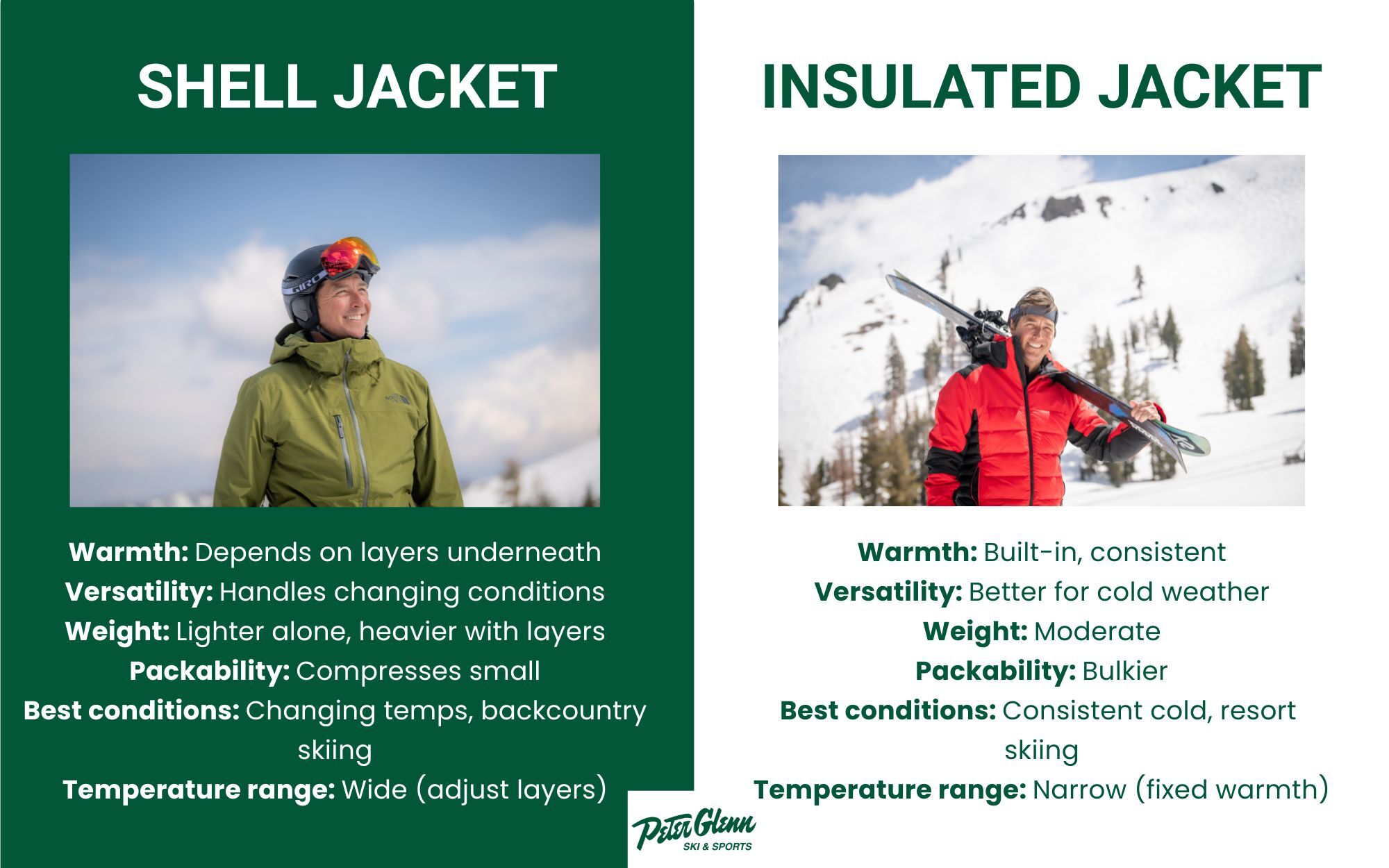
A shell jacket is an outer layer designed to block wind, snow, and wet conditions without any built-in insulation. It uses a waterproof, breathable membrane to keep moisture out while letting sweat vapor escape. This means you control your warmth level by choosing what layers to wear underneath.
Hard Shell vs Soft Shell
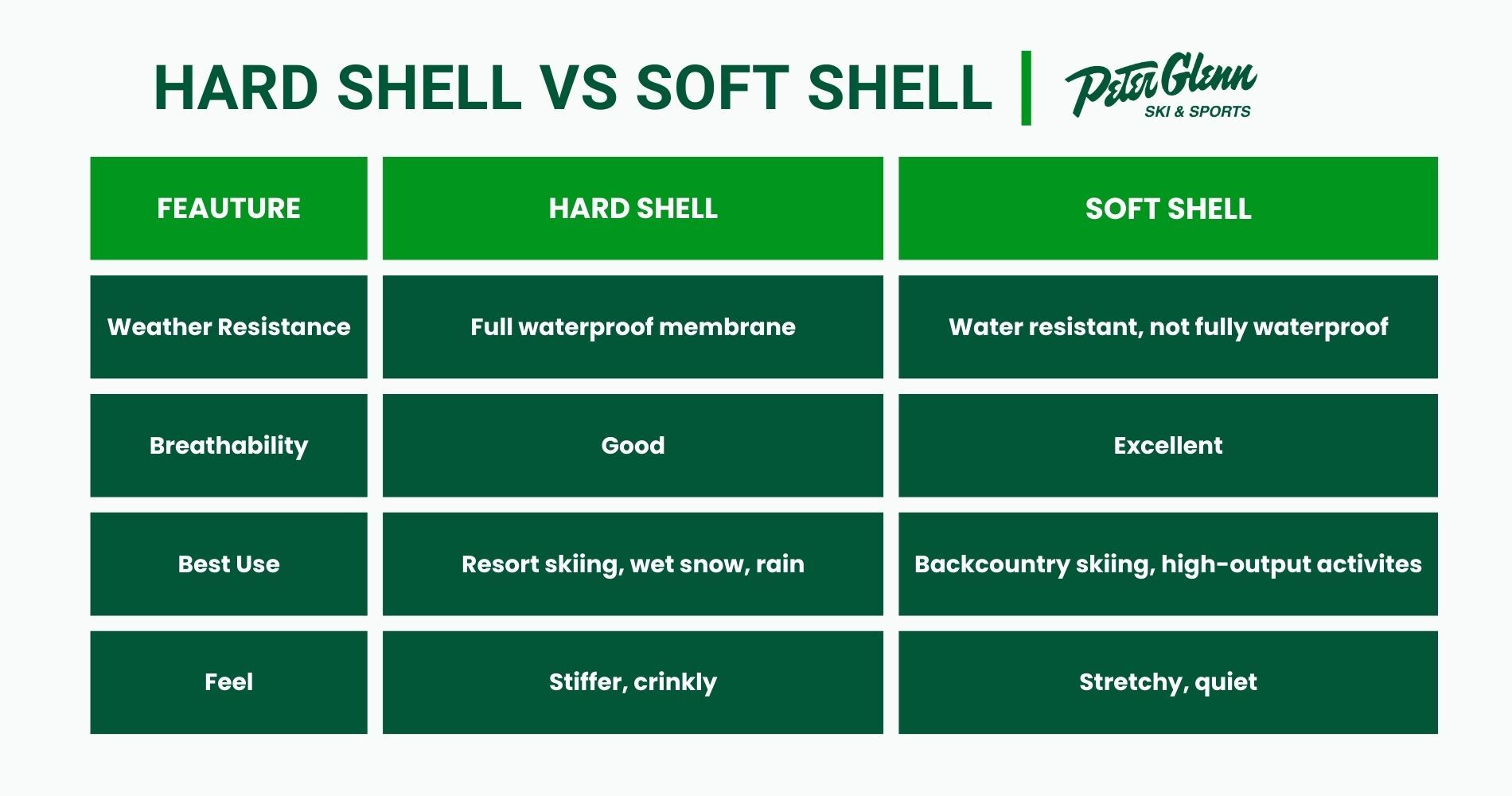
A hard shell provides maximum weather protection for storm days and wet conditions. The outer shell blocks everything the mountain throws at you. A soft shell jacket offers more stretch and breathability, making it popular for touring and warmer weather when you need mobility over full waterproofing. Many skiers own both a hard shell and a soft shell for different conditions.
Shell Jacket Features to Look For
- Waterproof membrane
- Pit zips for venting during climbs
- Powder skirt to keep snow out
- Helmet-compatible hood
- Wrist gaiters
Popular shell ski jackets from brands like Helly Hansen are known for weather resistance and durability in extreme conditions.
When to Choose a Shell Jacket
A shell ski jacket makes sense when you need flexibility across different mountain conditions:
Backcountry skiing and touring - You generate heat on the climb and cool down on the descent. A shell over a base layer and fleece jacket lets you add or remove your insulated layer as needed. The breathable membrane prevents overheating during high-output activities.
Spring skiing - A T-shirt under a shell works on a warmer day. Try that with an insulated jacket, and you overheat within minutes. Shells give you the weather resistance you need without trapping excess heat.
Variable mountain conditions - Weather changes fast in the mountains. A shell lets you adapt without being locked into one warmth level. You can start the morning with a puffy jacket underneath, then strip down to a base layer by afternoon.
High-output activities - Skinning, hiking, or any sustained effort creates sweat. A breathable shell paired with moisture-wicking layers keeps you drier than a fixed-warmth insulated jacket. This matters for safety as well as comfort.
Colder conditions with options - Even in cold weather, a shell with the right insulated layer underneath can match or exceed the warmth of an insulated jacket while giving you the option to vent.
Building a Layering System
With a shell, you control warmth through your base layer and mid layers. For a deeper dive, check out our guide on how to layer for skiing.
- Baselayer: Moisture-wicking synthetic or merino wool against your skin
- Mid-layer: Fleece jacket or puffy jacket, depending on temperature
- Outer layer: Waterproof shell for weather protection
This system lets you swap a lightweight fleece for a warmer puffy jacket as conditions change throughout the day.
What Is an Insulated Jacket?
An insulated ski jacket combines a waterproof shell with built-in insulation, typically synthetic insulation or down. This all-in-one design delivers warmth and weather protection in a single layer, which is why insulated jackets remain the most popular choice for resort skiing.
Synthetic Insulation
Synthetic insulation uses polyester fibers to trap heat. It performs well in wet conditions because it retains warmth even when damp. Most resort ski jackets use synthetic fill for this reason. Synthetic also dries faster if you work up a sweat or get caught in the rain.
Down Insulation
Down insulation offers a better warmth-to-weight ratio but loses effectiveness when wet. Hydrophobic down treatments help, but synthetic remains more practical for skiing in variable mountain conditions. Down makes more sense for extreme cold, where moisture is less of a concern.
Insulated Jacket Advantages
- Simple one-layer setup for cold weather
- Consistent warmth without extra gear
- Great for cold conditions and the coldest days at the ski resort
- Often includes powder skirt, pit zips, and ski-specific features
- Maximum warmth without managing multiple pieces
An insulated ski jacket works well for resort skiing, where you ride lifts, take breaks, and spend less time generating body heat through sustained effort.
When to Choose an Insulated Jacket
An insulated jacket works well for straightforward skiing:
Resort skiing and downhill skiing - Lift rides cool you down between runs, and an insulated ski jacket keeps warmth consistent without fussing with layers. You stay comfortable from first chair to last.
Cold conditions - If your ski resort runs cold and temps stay steady throughout the day, built-in insulation simplifies your setup and keeps you warm without extra planning.
Convenience - With one jacket, you can grab and go without making layering decisions. This makes mornings easier and cuts down on the gear you need to pack.
Warmer day flexibility - Many insulated jackets now include pit zips and breathable membranes that help dump heat when the sun comes out, or you start working harder.
Hybrid Options
Some jackets split the difference. Lightly insulated shells provide modest warmth while maintaining breathability. These work well for skiers who want some built-in protection without full insulation.
Another approach: buy a shell and pair it with a zip-in or snap-in puffy jacket. This gives you the versatility of a shell with the option for maximum warmth on the coldest days.
Making Your Decision
Consider these questions:
Where do you ski?
Resort skiing in consistently cold weather favors insulation. Backcountry skiing and variable conditions favor shells.
How hard do you push?
High-output activities generate heat. A layering system handles that better than fixed insulation.
Do you run hot or cold?
Personal preference matters. If you overheat easily, a shell gives you options. If you're always cold, built-in insulation keeps you comfortable.
Do you already own layers?
If you have a good fleece jacket and a puffy jacket, adding a shell creates a complete system.
Starting fresh?
An insulated jacket keeps the initial investment simpler.
Find Your Perfect Ski Jacket at Peter Glenn
Whether you lean toward the adaptability of a shell or the convenience of an insulated jacket, the right choice depends on where and how you ski. Shell jackets excel for backcountry skiing, spring skiing, and anyone who wants to fine-tune warmth with a layering system. Insulated jackets simplify cold-weather resort skiing with warmth and weather protection built in.
Peter Glenn carries both shell and insulated ski jackets from top ski jacket brands like Helly Hansen, Obermeyer, and The North Face. With over 65 years of helping skiers find the right gear, our team can answer questions and match you with a jacket that fits your skiing style. Browse the ski jacket collection online or visit a Peter Glenn location to find yours.