
Posted by Peter Glenn Staff on Nov 14th 2025
Table of Contents
At a Glance: Quick Steps for Waxing a Snowboard
- Clean the snowboard base
- Choose the wax (all-temp or temperature wax)
- Heat the waxing iron
- Drip wax across the board
- Iron to spread a thin, even layer
- Let the board cool to room temperature
- Scrape off excess wax using a plastic scraper
- Brush the base for a smooth finish
- Test glide on snow
Waxing a snowboard means melting wax onto the base to reduce friction so the board glides smoothly on snow. With the right supplies and a clear step-by-step process, you can wax at home and keep your board riding fast and responsive across the season.
Why Waxing Matters
When a snowboard glides across snow, friction occurs. Wax lowers that friction so the board can move more freely. Most snowboard bases are made from a material called P-Tex, the brand name for polyethylene, which absorbs wax. When the board is waxed, the base stays smooth and hydrated. When it is not waxed, the base can dry out and become rough.
How Wax Improves Glide
- Reduces drag from snow crystals
- Helps the snowboard handle flat terrain without slowing down as quickly
- Keeps the board from feeling “sticky” during turns
- Helps protect the base from dirt and abrasive patches on snow
When the base is properly waxed, it feels smooth to the touch and looks slightly glossy rather than chalky.
Signs Your Board Needs Wax
You do not need to guess. Your board gives clear signals when it needs new wax.
Look for:
- Chalky or white patches on the base
- The board feeling slow on flat sections of the mountain
- Needing to skate or push to maintain speed where you normally glide
- The board making a dry scraping sound on snow
If any of these appear, it's time for a wax job.
Supplies You Will Need
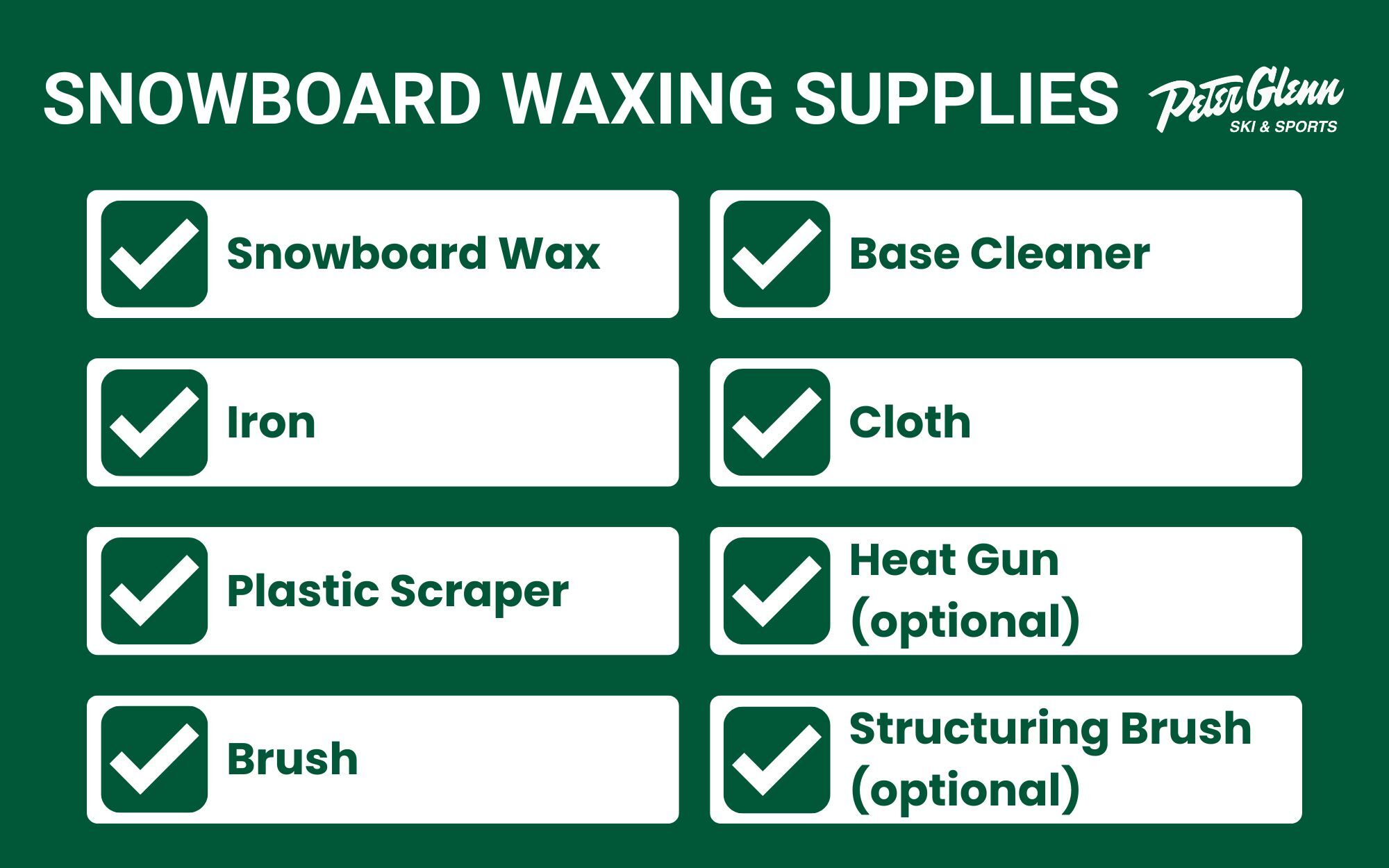
- Snowboard wax (all-temp or temperature-specific): Provides glide and helps protect the base.
- Waxing iron or regular iron: Melts the wax and spreads it across the snowboard base.
- Plastic scraper: Removes the excess wax once it has cooled.
- Nylon brush or horsehair brush: Smooths and finishes the wax coat for better glide.
- Base cleaner or a warm, damp paper towel: Clears away dirt and old wax before applying a fresh layer.
- Cloth: Wipes down the board and keeps your workspace tidy.
- Heat gun (optional): Softens old wax to make scraping quicker.
- Structuring brush (optional): Helps fine-tune the texture of the base for improved glide.
About Fluorinated Wax
Older wax products sometimes used fluorinated ingredients. These offered good glide but could leave behind residue that isn’t great for the environment or frequent handling. Many riders now choose modern snowboard waxes that avoid these chemicals while still delivering reliable performance across changing snow conditions.
Choosing the Best Wax for Conditions
Snow temperature affects how wax behaves. Cold snow is sharper and harder, so a harder wax works better. Warm snow has more moisture, so a softer wax gives better glide.
Wax Options
- All-Temperature Wax
- Good for trips where weather changes
- Convenient and widely used
- Temperature Wax
- Comes in cold, medium, and warm formulas
- Matches conditions more precisely
- Eco Wax
- Designed to skip harsh chemicals
- Works across many snow types
If you ride at the same mountain frequently, look up the usual temperature range during your visits and choose temp wax based on that. If you travel or ride in changing weather, an all-temp wax is easier.
Preparing the Snowboard
This step allows the wax to bond properly.
- Bring the snowboard to room temperature.
- Clean the base using base cleaner or a warm, damp paper towel to remove dirt.
- If there is old wax, scrape it lightly before cleaning.
- Dry the base completely.
Dirt trapped under wax reduces glide, so cleaning matters.
Step-by-Step: How to Wax a Snowboard at Home
1. Heat the Iron
Turn on your waxing iron or regular iron. Use a low to medium temperature. The wax should melt evenly without smoking.
If the wax smokes:
- The iron is too hot
- Lower the heat and give it a moment to adjust
2. Drip Wax onto the Base
Hold the wax block to the iron and let small droplets fall onto the snowboard base. This is often called the wax drip.
Whether you are waxing a new snowboard or refreshing a base, you only need enough wax to form a thin coat.
3. Spread the Wax
Place the iron directly on the snowboard base and move it slowly from nose to tail. Work the melted wax into a smooth layer. The surface should look evenly coated, without thick puddles.
Constant movement prevents overheating one spot.
4. Let the Wax Cool
Set the board aside to cool for at least 30 minutes. When the board is completely cool, the wax has bonded to the base. Some riders wait several hours or leave the board overnight.
5. Scrape Excess Wax
Use a plastic scraper. Hold it at a slight angle and scrape from nose to tail. Long, steady strokes work best. You are removing extra wax that sits on top while keeping the wax that soaked into the base.
The surface should feel smooth, not sticky.
6. Brush the Base
Use a nylon brush or horsehair brush to polish the base. Brush from nose to tail in multiple passes. This step improves glide noticeably by smoothing the final finish.
If you have a structuring brush, use it after the nylon brush to help snow move cleanly under the board.

Hot Wax vs Rub-On Wax
Hot Wax
Pro: Longer lasting, better glide
Con: Takes more time and supplies
Rub-On Wax
Pro: Quick and easy
Con: Wears off quickly
Rub-on wax is helpful when traveling or making quick adjustments, but hot waxing is the best long-term method for speed and durability.
Common Waxing Mistakes to Avoid
- Using too much wax
- Heating the iron too high
- Scraping before the board cools
- Skipping the brushing step
- Using fluorinated wax without proper handling
Taking your time with each step leads to better glide and a longer-lasting layer of wax.
Ready to Ride? Shop at Peter Glenn Today!
Waxing a snowboard gives you smoother glide, better handling, and a more responsive feel on snow. Once you learn the steps, waxing at home becomes simple: clean the base, drip on wax, spread it with an iron, let it cool, scrape, and brush. Keeping up with waxing helps the board stay fast and prevents the base from drying out across the season.
If you're preparing for your next day on the mountain and want to refresh your setup, Peter Glenn carries a full selection of snowboards, bindings, boots, and snowboard apparel. You can browse gear online or visit a retail shop for help choosing the right fit and style for your riding.
Gear up for the season ahead and keep your board riding its best.