


Posted by Peter Glenn Staff on Dec 16th 2025
Table of Contents
At a Glance:
- Start with a balanced, athletic stance
- Keep your upper body quiet and facing downhill
- Absorb bumps by flexing and then extending your legs
- Plant your pole on the top of each mogul
- Make short turns around the sides of bumps
- Control your speed with each turn
- Pick a line and commit to it
- Stay light on your feet and maintain rhythm
Learning how to ski moguls can feel intimidating at first. Those bumpy, ungroomed sections of the mountain look chaotic compared to smooth, groomed slopes. But mogul skiing is one of the most rewarding skills you can develop on the mountain. Once you understand the technique, mogul fields become a fun challenge rather than an obstacle to avoid.
What Are Moguls?
Moguls are mounds of snow that form naturally on ski slopes. They develop when multiple skiers carve turns in the same spots, pushing snow into piles over time. You will find mogul fields on steeper terrain at most ski resorts, often on runs that are not regularly groomed.
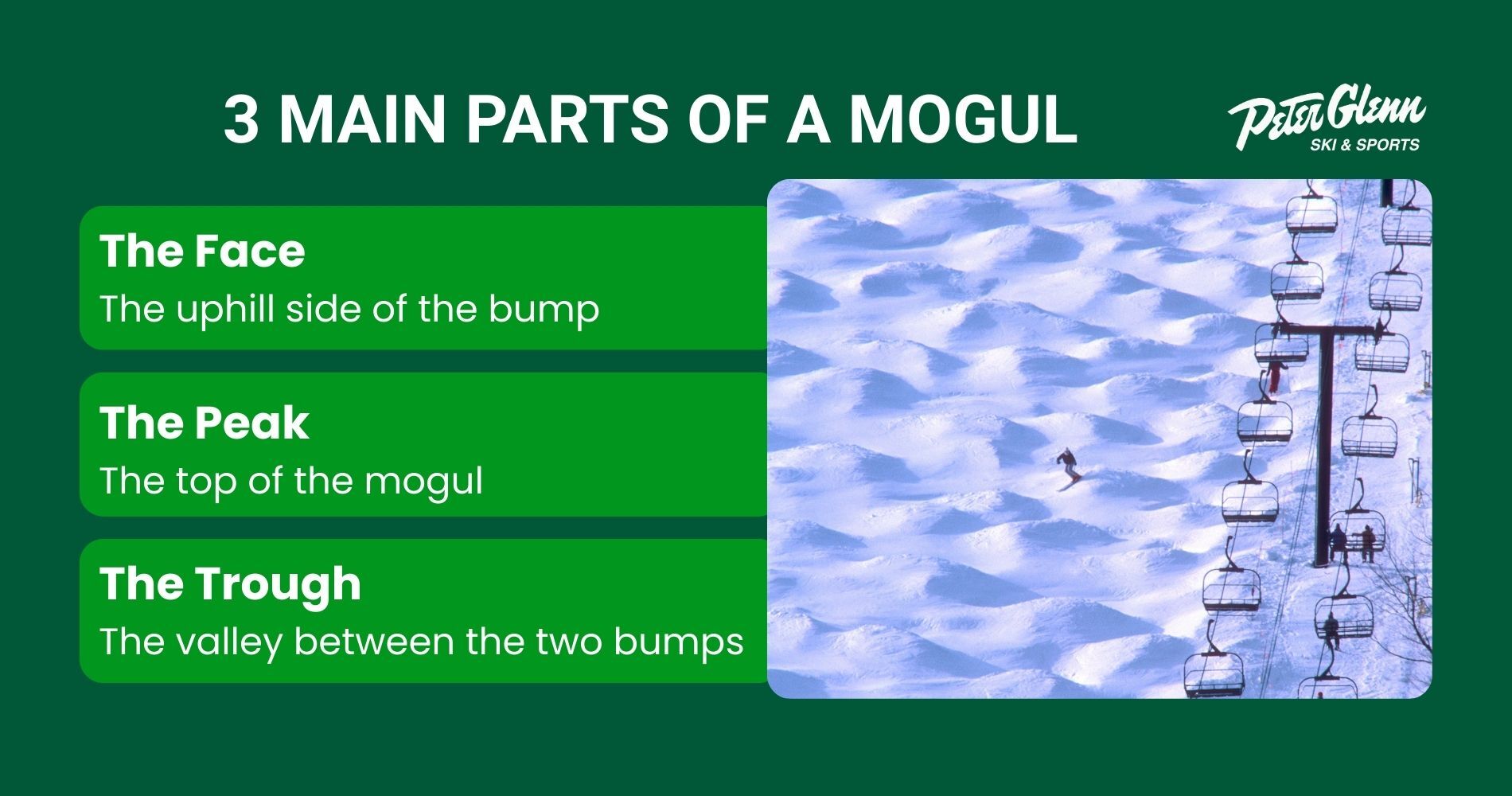
Understanding this terrain helps you plan where to turn and how to control your speed throughout a bump run.
Body Position Basics
Your body position makes or breaks your mogul skiing. The right stance keeps you balanced and ready to react, while poor positioning leads to fatigue and loss of control.
Upper Body
Keep your upper body quiet and stable. Your chest should face down the fall line at all times, even as your legs and skis turn beneath you. This separation between your upper and lower body is what allows advanced skiers to flow through moguls smoothly.
Avoid the temptation to rotate your shoulders with each turn. Twisting your upper body throws off your balance and makes it harder to set up for the next mogul.
Lower Body
Your legs do most of the work in mogul skiing. Think of them as shock absorbers. As you approach a bump, extend your legs slightly. As you ski over the top, flex your knees and pull them toward your chest to absorb the impact. This extension and compression movement keeps your centre of gravity stable while the terrain changes beneath you.
Keep your feet about hip-width apart for a stable base. Skiing with your feet too close together reduces stability, while too wide limits your ability to make quick adjustments.
Pole Planting Technique
Pole planting is more than just a habit in mogul skiing. It serves several purposes:
- Triggers your next turn
- Helps maintain rhythm
- Provides balance and timing cues
- Keeps your upper body facing downhill
Plant your pole on top of the mogul just before you initiate your turn. The motion should come from your wrist, not your whole arm. A quick, light pole plant is all you need to stay in rhythm.
Choosing Your Line
There are several ways to navigate a mogul field. The line you choose depends on your skill level and how much speed control you need.
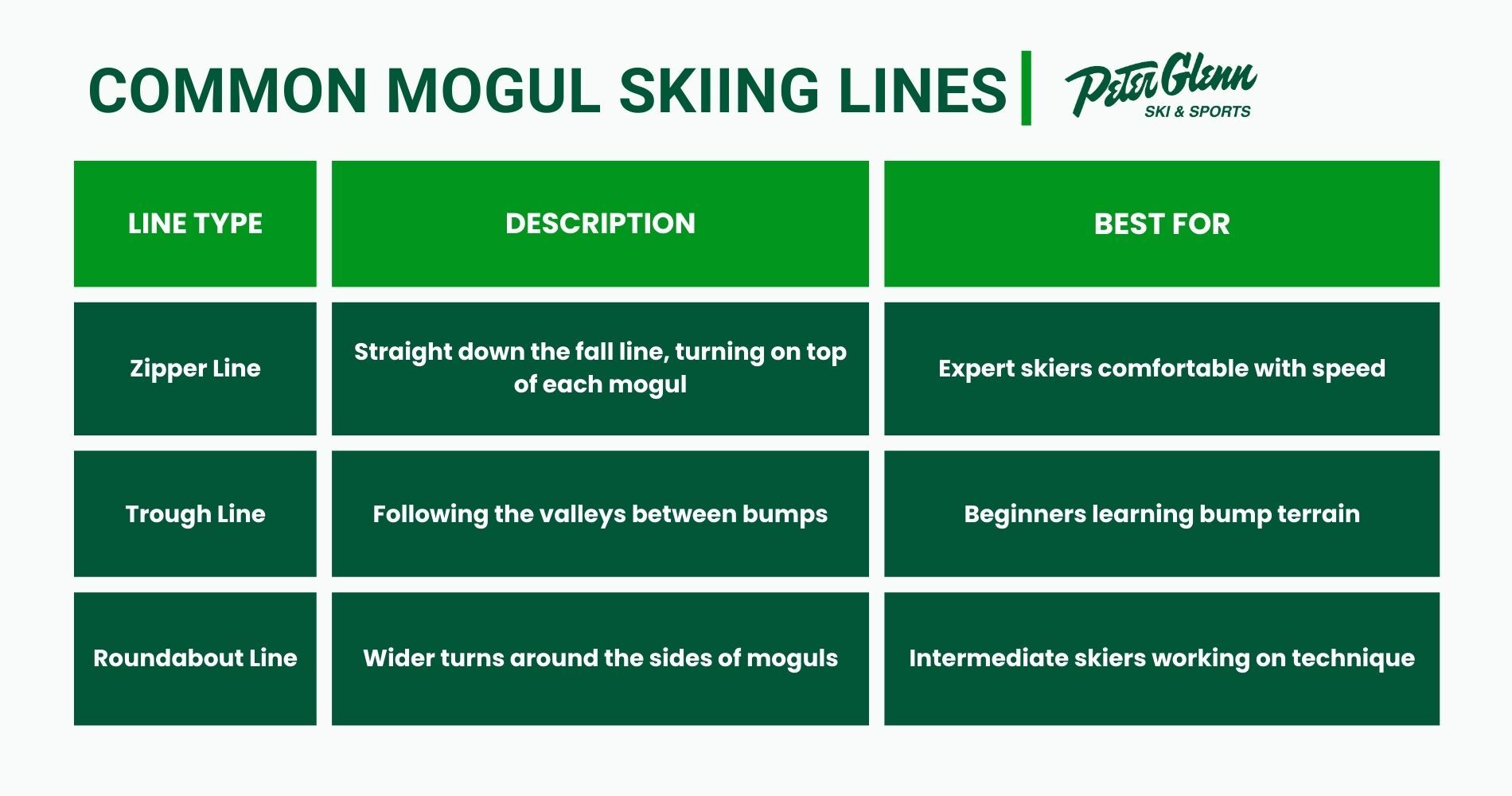
Most skiers start with the trough line or roundabout approach before progressing to a zipper line descent. There is no wrong choice. Pick the line that matches your comfort level.
Speed Control Strategies
Controlling your speed is one of the biggest challenges when skiing moguls. Without proper technique, you will pick up speed quickly and lose control.
Turn Shape
Short turns are your best friend in a mogul field. Each turn acts as a speed check. The tighter your turn, the more you slow down. Rounder, wider turns let you carry more speed.
Edge Control
Use your edges to scrub speed as you come around each bump. A quick, sharp edge set at the end of your turn helps you stay in control before moving to the next mogul.
Terrain Use
The moguls themselves can help you control speed. Turning on the uphill face of a bump naturally slows you down, similar to the way a water slide curves to control your descent.
Common Mistakes to Avoid
Even experienced skiers struggle with moguls. Here are the most frequent errors and how to fix them:
Sitting back: Leaning too far back puts you in the backseat, making it impossible to initiate turns. Keep your weight centered over your feet.
Stiff legs: Locking your knees turns every bump into a jarring impact. Stay loose and let your legs flex and extend with the terrain.
Looking at your skis: Your body follows your eyes. Look ahead to the next two or three moguls, not at the one directly beneath you.
Fighting the mountain: Trying to muscle through moguls leads to exhaustion. Work with the terrain, not against it.
Inconsistent rhythm: Mogul skiing requires a steady tempo. Once you find your rhythm, try to maintain it throughout the run.
Tips for Beginners
If you are new to mogul skiing, start small. Look for mogul fields in the beginner area with smaller, more widely spaced bumps. These give you room to practice your technique without feeling overwhelmed.
Consider taking a private lesson or ski instructor course focused on bump skiing. A qualified ski instructor can watch your form and give you real-time feedback that speeds up your learning.
Practice the absorption movement on groomed slopes first. Find small rollers or gentle terrain features and work on flexing and extending your legs as you ski over them. This builds muscle memory before you tackle a real mogul run.
Time to Hit The Slopes
Mogul skiing rewards patience and practice. Focus on keeping your upper body stable, absorbing bumps with your legs, and planting your poles with consistent timing. Start with easier lines and smaller bump runs, then gradually work your way up to steeper, more challenging terrain. Every mogul skier was once a beginner who decided to stop avoiding those bumpy sections and start learning.
When you are ready to hit the slopes, having the right gear makes a difference. Peter Glenn carries ski apparel and equipment from top brands like Spyder, Bogner, and Oberymeyer.You'll find flexible outerwear for mogul runs, poles built for quick planting, and everything else you need on the mountain. Visit a store or shop online to gear up for the season.