Posted by Peter Glenn Staff on Nov 14th 2025
Table of Contents
The Short Answer: The best snowboard boots are the ones that match your riding style, fit your foot shape, and support the way you move on the mountain. The right boot should feel secure without pressure points or heel lift, and it should pair well with your snowboard bindings for smooth control on snow.
Choosing snowboard boots comes down to comfort, support, and how the boots respond when you ride. Flex, lacing systems, and boot liners all affect performance. A stiffer boot works well for advanced riders who want more control when carving or riding steep lines. Softer boots are easier to move in and often feel better for beginners or riders who spend time in the terrain park. Fit matters most. A heat-moldable liner or custom insole can help you get a comfortable fit that lasts through long days. Once you know what type of feel you like, comparing boots gets easier.
How to Choose the Best Snowboard Boots
Understanding the differences between models can help you narrow down your search based on your individual needs and riding style.
Boot Flex
Flex affects how a boot feels when you ride.
- Soft Flex: More forgiving and comfortable, often preferred by beginners and park riders
- Medium Flex: Works across most terrain, balanced feel
- Stiff Flex: More support at higher speeds, good for advanced riders
Lacing Systems
Different systems change how the boot tightens.
- Traditional Laces: Adjustable, familiar
- Speed Lace Systems: Quick pulls that tighten zones separately
- Boa Dial / Dual Boa: Dials tighten evenly and are easy to adjust during the day
Fit and Foot Shape
Comfort depends on how the liner supports your foot and how well the boot locks in a perfect fit around your heel and ankle.
Look for:
- Secure ankle and heel hold
- No painful pressure points
- A liner that can mold to your foot shape
- Room for a custom insole if needed for arch support
Best Snowboard Boots for Men in 2026
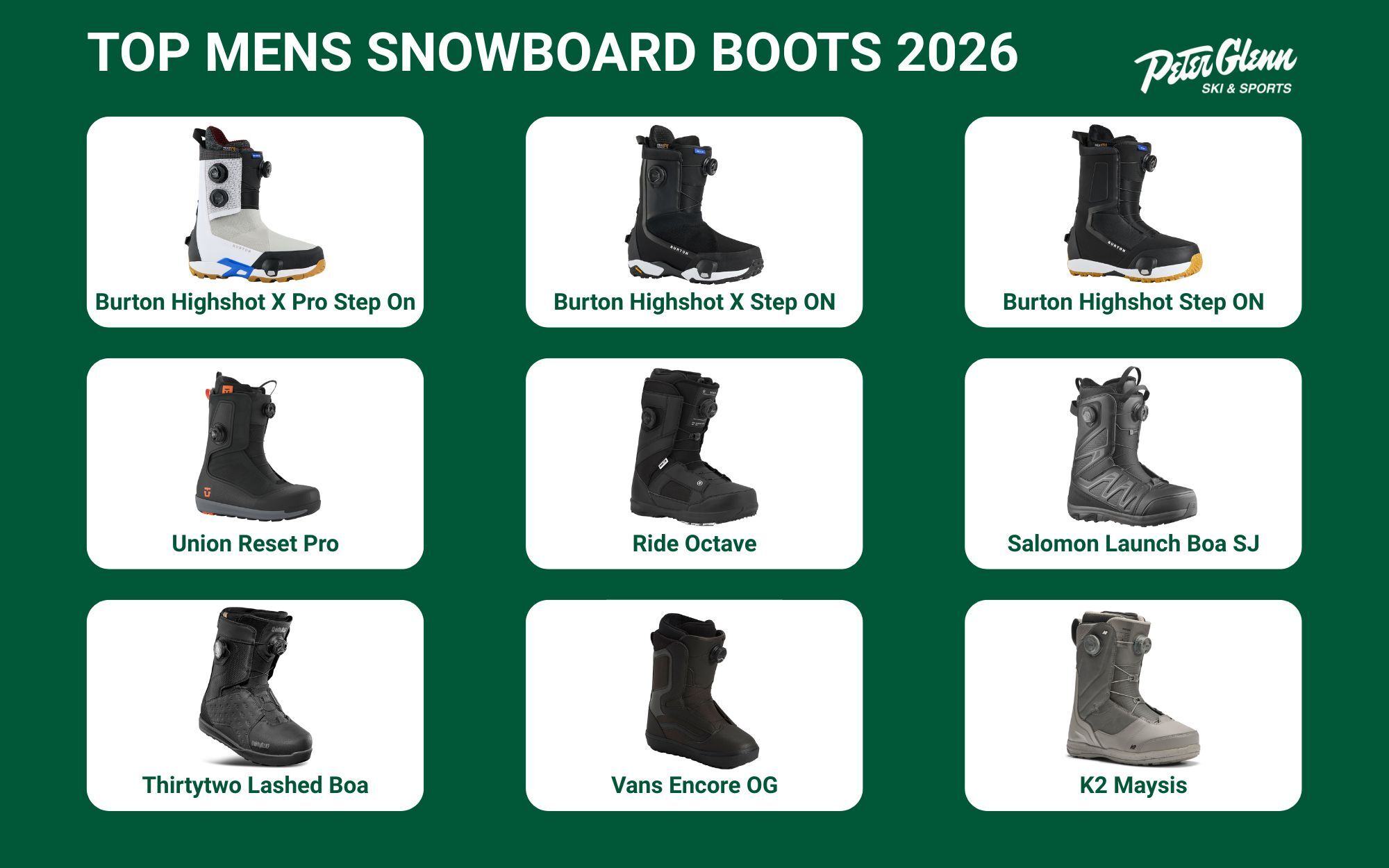
Designed for riders who want strong response and quick setup with the Step On system. Stiffer feel supports riding fast and carving. Heat-moldable liner helps dial in shape.
Similar structure with slightly more flexibility. Good for all-mountain riders who want comfort with Step On speed.
More approachable flex, making it suitable for intermediate riders. Comfortable support that works across groomers, side hits, and mellow powder.
Why Step On systems appeal: No straps and quick entry. Riders who value efficient transitions often enjoy this style.
Medium flex profile that fits well with many binding setups. Supportive ankle hold helps with long days on the mountain.
Stiffer boot for riders who want more control. The liner conforms well to reduce pressure points. Works for advanced riders and big mountain terrain.
Dual Boa closure and internal harness secure the heel. Lightweight and versatile for all-mountain and park riding.
Reliable medium-flex feel with Boa tightening. The liner can be heat molded for a comfortable fit that adapts over time.
A lighter, softer boot that offers movement and comfort. Popular among newer riders or freestyle-focused snowboarders.
Known for strong heel hold thanks to a built-in ankle harness. Dual Boa makes adjustments quickly on the mountain.
Best Snowboard Boots for Women in 2026

Supportive feel for riders who want precise handling and stability.
A slightly softer option than the Highshot X. Works for a wide range of skill levels.
Boa closure makes tightening simple. A lightweight feel helps reduce fatigue.
Medium flex boot with dual Boa closure. Comfortable cushioning helps with all-day riding.
Soft to medium flex with dual Boa zones. Good balance of support and movement.
Soft flex and lightweight feel. Comfortable for cruising and park riding.
How Snowboard Boots Should Fit and Perform
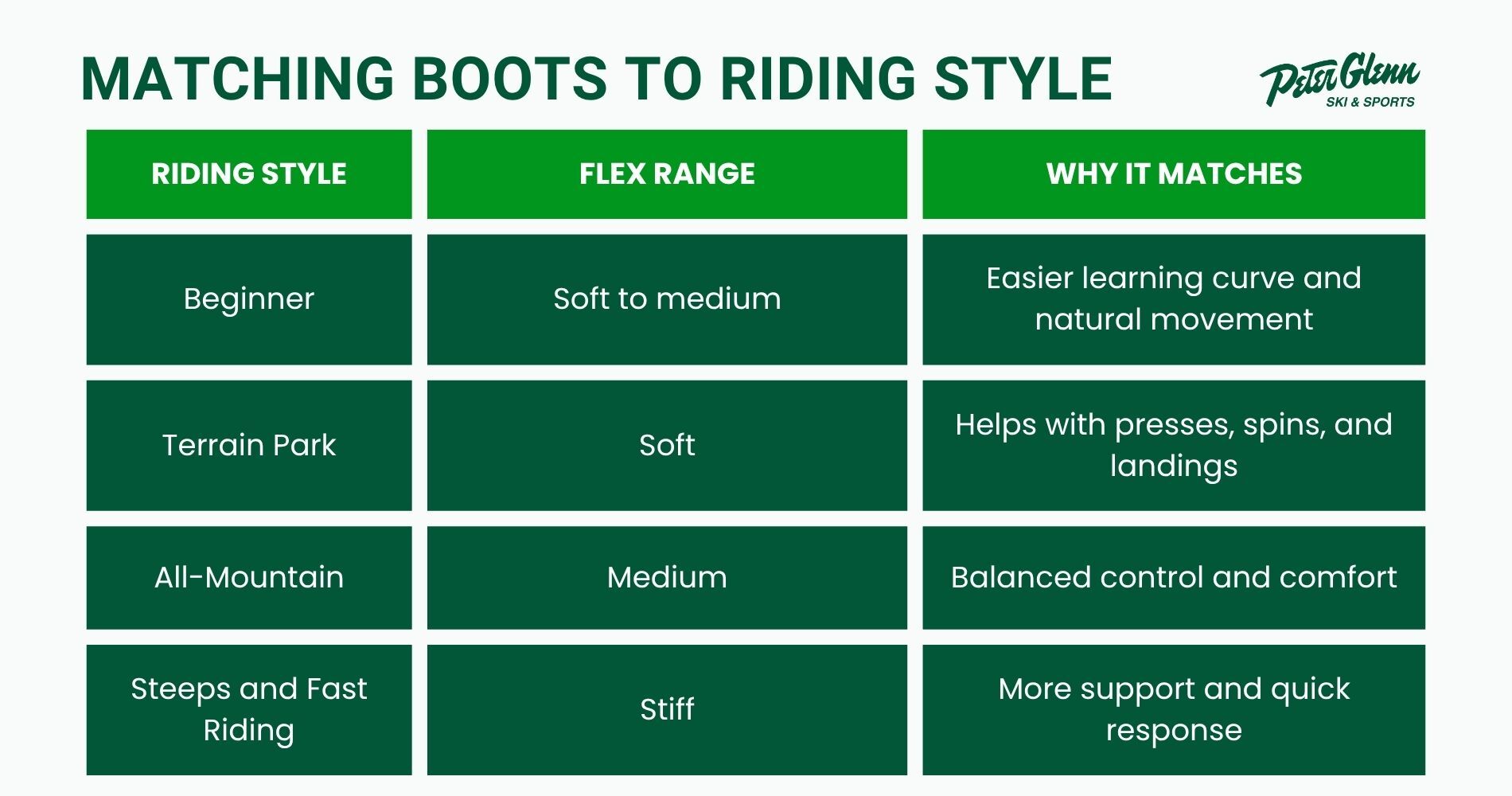
How you ride influences how the boot should feel. Riders who turn with more precision may want a firmer boot. Riders who like a playful feel may choose something softer.
Bindings and Boot Compatibility
Boots and bindings work together. If you ride Step On bindings, you need Step On boots. Traditional bindings work with most other snowboard boots. Try to match flex levels when possible:
- Soft boot + soft binding = playful feel
- Medium boot + medium binding = all-mountain balance
- Stiff boot + stiff binding = precise handling
Fit Troubleshooting: Avoiding Heel Lift and Pressure Points
Even well-built snowboard boots can feel uncomfortable if the fit isn’t dialed in. Small adjustments can make a big difference in how your boots feel on the mountain.
Heel lift happens when your heel rises as you lean forward. Tightening the internal harness usually helps, but you may also want to look for boots with stronger ankle hold or add a custom footbed for added support.
If your toes feel cramped or pushed forward, heat-molding the liner can create more room and help the boot shape better around your foot.
Sharp pain under the arch often comes from lack of support. Adding arch support or swapping to a structured custom insole can relieve pressure and improve comfort over long days.
If the top of your foot feels tight (instep pressure), try loosening the upper Boa or speed-lace zone if your boot offers separate tightening areas. Adjusting these zones can relieve pressure without sacrificing heel hold.
Dialing in these fit details ensures the boot feels like an extension of your foot — supportive, secure, and comfortable all day long.
A heat-moldable liner often solves multiple fit issues because it shapes directly to your foot. Many riders have different shapes in each foot, so even small adjustments matter.
Break-In and Boot Care
New boots take a few days to settle.
Break-In Tips
- Wear your boots at home for 15–30 minutes at a time before riding.
- Flex forward gently to help the liner shape.
- Take breaks on the first ride day so your feet relax.
Care for Longer Boot Life
- Dry boots fully after each day. Do not place them directly on high heat.
- Loosen laces fully before taking boots off to protect the heel pocket shape.
- Check Boa cables and laces throughout the season.
Step On vs Traditional Bindings
Step On
- Quick to get in and out
- Less adjustment on the mountain
- Works best for riders who value ease of use
Traditional Bindings
- Straps allow tuning of fit
- More options across brands
- Appeals to riders who want direct control over feel
Neither system replaces the other. It depends on how you like to ride.
Finding the Right Boot
Choosing the best snowboard boots is mostly about fit and how you want the boot to feel while riding. The right boot should feel snug in the heel, supportive along the ankle, and comfortable enough for long days. Flex and lacing systems help shape the riding experience. Softer boots work well for playful riding, while stiffer boots support faster speeds and steeper terrain. Liners that can be molded or paired with a custom footbed help improve comfort, especially if you have a high arch or specific foot shape. Trying on boots in person can help you compare how different brands hold the ankle and heel.
Peter Glenn carries a wide selection of snowboard boots for different riding styles and skill levels. Their team can help you find a boot with the right flex, closure system, and liner that supports how you ride. With the right boot, your overall experience on the mountain improves.
Shop snowboard boots, as well as bindings and snowboards, at Peter Glenn to get ready for the season.