

Posted by Peter Glenn Staff on Jun 2nd 2026
Table of Contents
- When Should You Ski in Iceland?
- Where to Ski in Iceland
- Backcountry Skiing and Heli Skiing on the Troll Peninsula
- Beyond the Slopes
- Peter Glenn: Gear Up for Skiing in Iceland
- Frequently Asked Questions
At a Glance: Iceland’s terrain ranges across floodlit resort slopes near the capital, remote backcountry descents to the Arctic Ocean, and world-class heli skiing on the Troll Peninsula. For most visitors, March and April offer the best combination of snow conditions and daylight hours.
Iceland is not a typical ski destination, and that is exactly what makes it worth considering. There are no lift queues, no crowded resort villages, and no shortage of untouched terrain. The natural landscape replaces everything familiar about resort skiing, with volcanic scenery giving way to steep couloirs that drop toward the Arctic Ocean. Iceland's ski culture is inseparable from its broader outdoor identity, and that combination is what sets it apart from anywhere else on the ski map. Sitting just below the Arctic Circle, the country offers a ski experience that feels genuinely unlike anywhere else.
When Should You Ski in Iceland?
The Best Months to Visit Iceland
Iceland's ski season generally runs from late November through May, with March and April standing out as the ideal months for most visitors. Daylight hours have returned to a comfortable length by March, snow conditions are reliable across the main ski areas, and temperatures keep the snowpack stable.
How the Season Changes Month by Month
March offers the best combination of winter atmosphere and growing daylight. Snow conditions are typically strong across the north, and the northern lights are still visible on clear nights. April brings even more daylight and the arrival of spring corn snow, which heli-ski operators on the Troll Peninsula particularly favor for its smooth, fast surface. The long days and frequent sunny days in April make it a favorite among ski touring groups. From May onward, the midnight sun takes over and some operators continue running tours well into June.
Plan for the Weather
Iceland's weather is one of the biggest variables to account for. Strong Arctic winds, sudden storms, and changing visibility can all close slopes or cancel tours with little warning. Building flexibility into your itinerary should be part of your plan, not an afterthought.
Quick Reference: Iceland Ski Season at a Glance
|
Month |
Conditions |
Northern Lights |
Best For |
|
November–February |
Variable, powder possible |
Yes |
Northern lights, night skiing, backcountry powder |
|
March |
Best all-round conditions |
Possible |
All skiers, heli skiing, ski touring |
|
April |
Spring corn snow, long days |
Unlikely |
Heli skiing, ski touring, backcountry |
|
May–June |
Late season, glacier terrain |
No |
Corn snow, midnight sun |
Where to Ski in Iceland
Hlíðarfjall, Akureyri
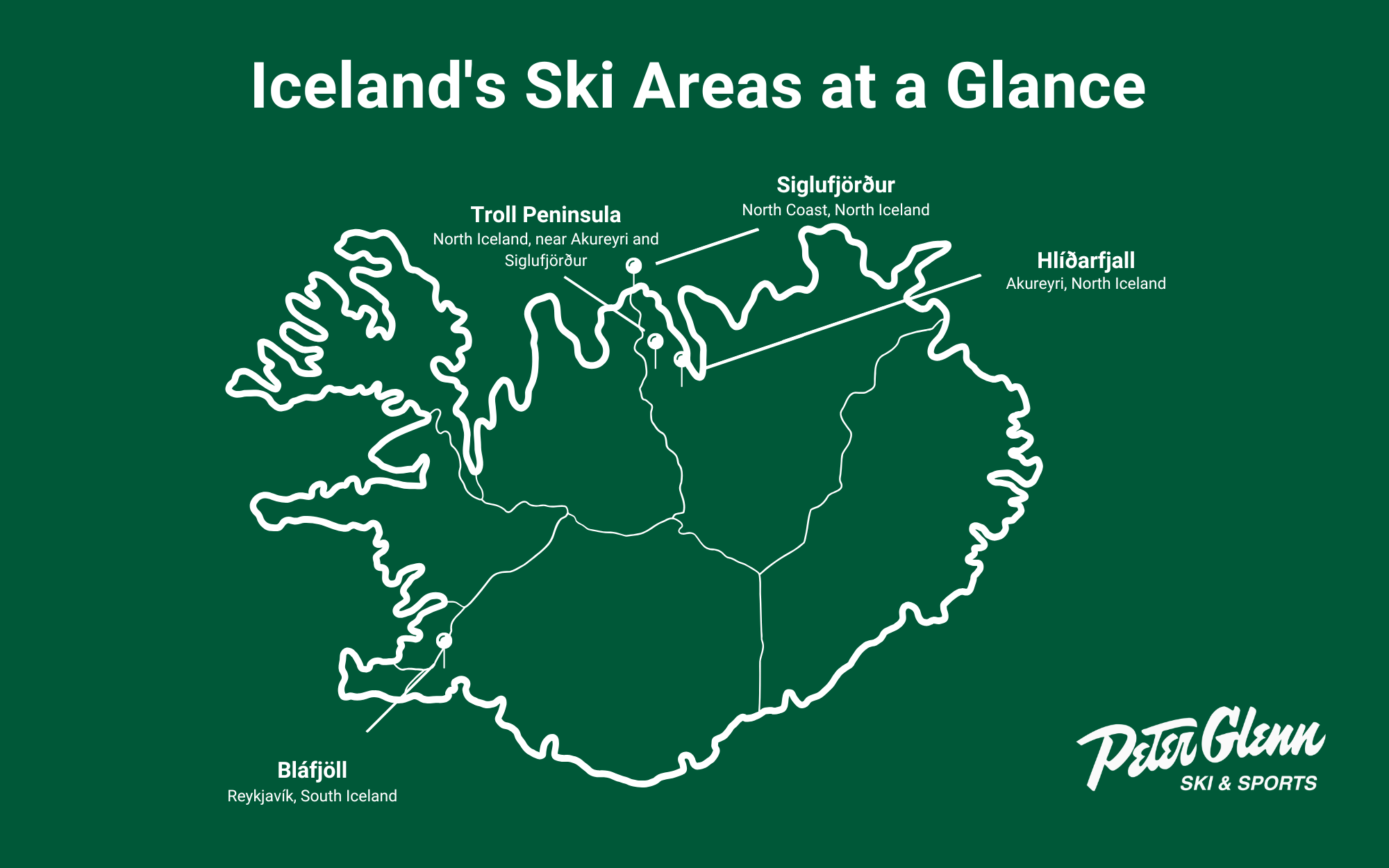
Hlíðarfjall is Iceland's best all-around ski resort and the heart of the country's ski culture. Located just a short drive from Akureyri city center, the resort features 23 alpine slopes, 8 ski lifts including 2 quad chairlifts, and a vertical drop of 537 meters. The longest run stretches over 2.5 kilometers from a summit elevation of 1,014 meters. Floodlit slopes make night skiing possible throughout the season, and cross-country trails and a snow park with jumps, rails, and boxes give skiers and riders plenty to explore beyond the alpine runs. The resort is also equipped with snow cannons, which help maintain reliable conditions from late November through early May. For full resort details, the official Visit Iceland page for Hlíðarfjall has current information on hours, passes, and conditions.
A Unique Off-Slope Experience
Akureyri sits at the end of Eyjafjörður, Iceland's longest fjord, where humpback and minke whales can be spotted on tours from April onward. Combining a ski day at Hlíðarfjall with a whale watching excursion on the fjord is one of the more unique ways to spend a day anywhere in northern Europe.
Bláfjöll, Reykjavík
Bláfjöll is Iceland's largest ski resort by slope length, located about 25 to 30 minutes from central Reykjavík. It covers 15 kilometers of downhill slopes served by 14 lifts, with elevations ranging from 460 to 700 meters and a vertical drop of 240 meters. On weekdays the resort stays open until 9 PM, making it one of the few places in Europe where you can ski under floodlights after dark. On clear nights between November and March, the northern lights are also visible from the surrounding area once you step away from the slopes.
Terrain and Accessibility
About two-thirds of the runs are graded easy, making Bláfjöll a solid option for beginners and travelers who want to fit a ski day into a broader Reykjavík trip. With over 30 kilometers of groomed cross-country trails and a terrain park for freestyle skiers and snowboarders, Bláfjöll offers something for nearly every type of winter sports enthusiast.
Siglufjörður
Siglufjörður is a small but memorable ski area tucked into a steep fjord on the north coast, set within a former herring fishing village. The resort has 4 lifts and 5.5 kilometers of slopes across terrain between 200 and 650 meters in elevation, with cross-country skiing trails also available in the surrounding area. Floodlights allow extended skiing into the evening, and the ski lodge has solid facilities for visitors. The atmosphere here is as much about the setting as the skiing, with dramatic fjord views from nearly every run and a genuine sense of remoteness that larger resorts cannot offer.
Backcountry Skiing and Heli Skiing on the Troll Peninsula
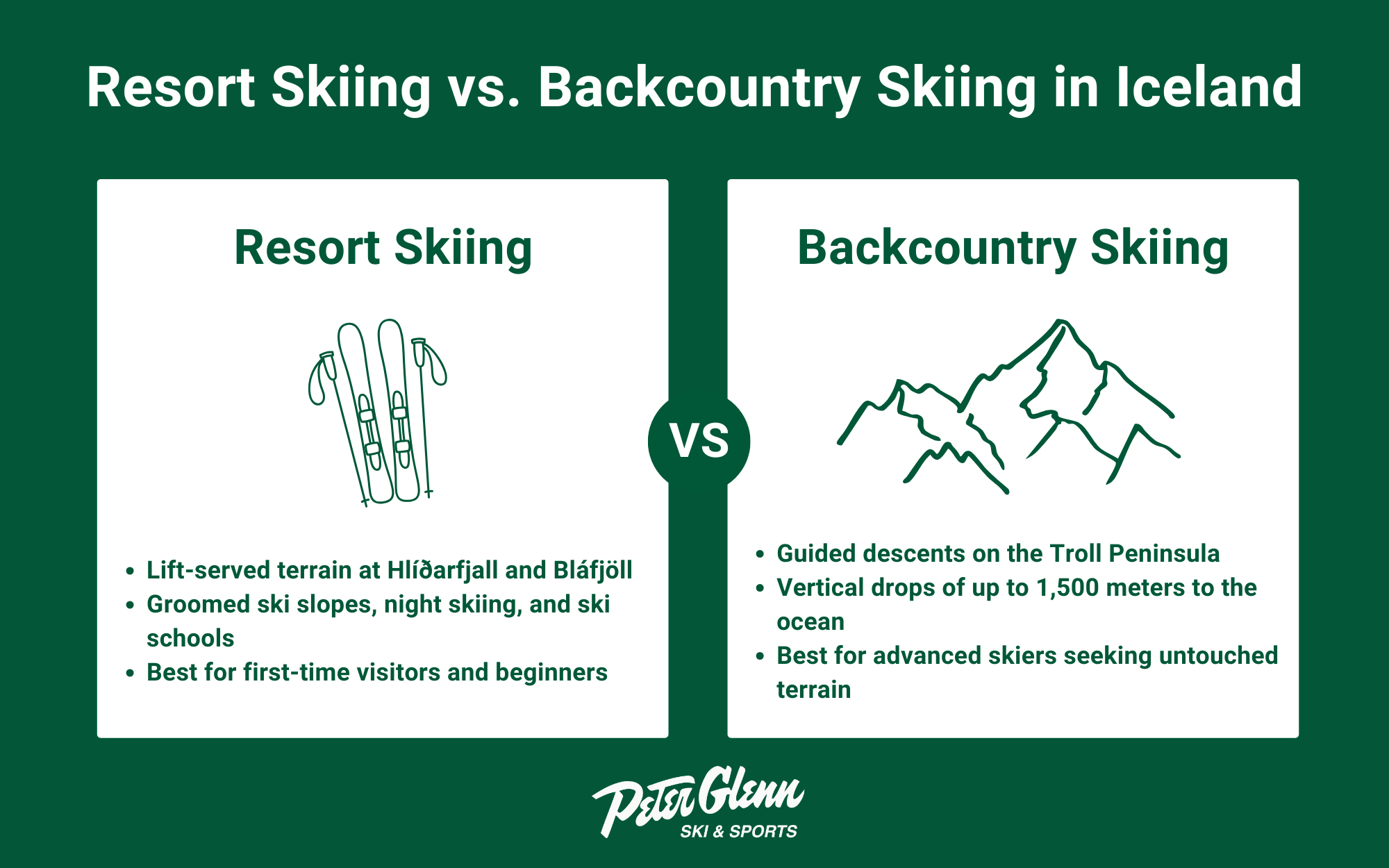
For skiers looking for something beyond lift-served terrain, Iceland's Troll Peninsula stands out as one of the most compelling backcountry destinations in the world. This region of north Iceland covers more than 4,000 square kilometers of Arctic mountain terrain with vertical descents of up to 1,500 meters. At least three arctic heli skiing operators run programs in and around Akureyri and Siglufjörður from February through the end of June, each offering access to terrain that is only reachable by helicopter or with a certified ski guide.
What to Expect on the Mountain
The peninsula is particularly known for summit-to-sea descents, where ski slopes start high on the mountain and finish at the edge of the Arctic Ocean. Steep couloirs, wide glacial bowls, and the combination of winter powder in early season and corn snow in spring make it one of the most varied backcountry ski destinations in the world. Ski touring is also well-established throughout the peninsula, with guided multi-day programs and single-day options available through local operators.
Beyond the Slopes
Days on the slopes in Iceland tend to blend naturally into the country's broader outdoor culture. A day on the mountain often ends in a geothermal hot tub or at a natural hot spring nearby. Many lodges on the Troll Peninsula feature ocean view hot tubs and saunas overlooking the fjords.
What to Pack for Skiing in Iceland
Iceland's conditions require a different level of preparation than a standard Alpine resort trip. Here is what to bring:
- Moisture-wicking and insulating base layers for Iceland's variable temperatures throughout the day
- Waterproof and windproof outer layers that can handle sudden Arctic weather changes without warning
- Sun protection for spring skiing, especially at higher elevations during long daylight hours
Peter Glenn: Gear Up for Skiing in Iceland
Skiing in Iceland is a demanding and rewarding experience that requires the right gear. The terrain is unlike anything a traditional resort offers, and the weather can shift fast. At Peter Glenn, we carry ski jackets, ski pants, and technical outerwear from top brands including Obermeyer, Patagonia, The North Face, and Bogner. Browse our full collection at peterglenn.com and gear up before your trip to the Arctic.
Frequently Asked Questions
Is Iceland a good place to ski?
Yes, though it is a different kind of ski experience. Iceland offers uncrowded terrain, dramatic Arctic scenery, and world-class backcountry and heli-skiing on the Troll Peninsula. It suits adventurous skiers more than those looking for a traditional groomed resort experience.
When is the best time to ski in Iceland?
March and April are the best months overall. Snow conditions are reliable, daylight hours are longer, and heli-ski operators on the Troll Peninsula are in full swing. March also offers a good chance of seeing the northern lights.
Where is the best ski resort in Iceland?
Hlíðarfjall above Akureyri is Iceland's best all-around ski resort, with 23 alpine slopes, 8 lifts, and a 537-meter vertical drop. It also provides easy access to backcountry terrain on the nearby Troll Peninsula.
Can you ski and see the northern lights in Iceland?
Yes. Bláfjöll near Reykjavík and Hlíðarfjall near Akureyri both offer night skiing with floodlit slopes, and the northern lights are visible from November through March on clear nights.
What is heli skiing like on the Troll Peninsula?
Multiple operators run heli-skiing programs from February through June, with vertical descents of up to 1,500 meters and summit-to-sea runs ending at the edge of the Arctic Ocean. It is considered one of the most unique heli-skiing destinations in the world.